
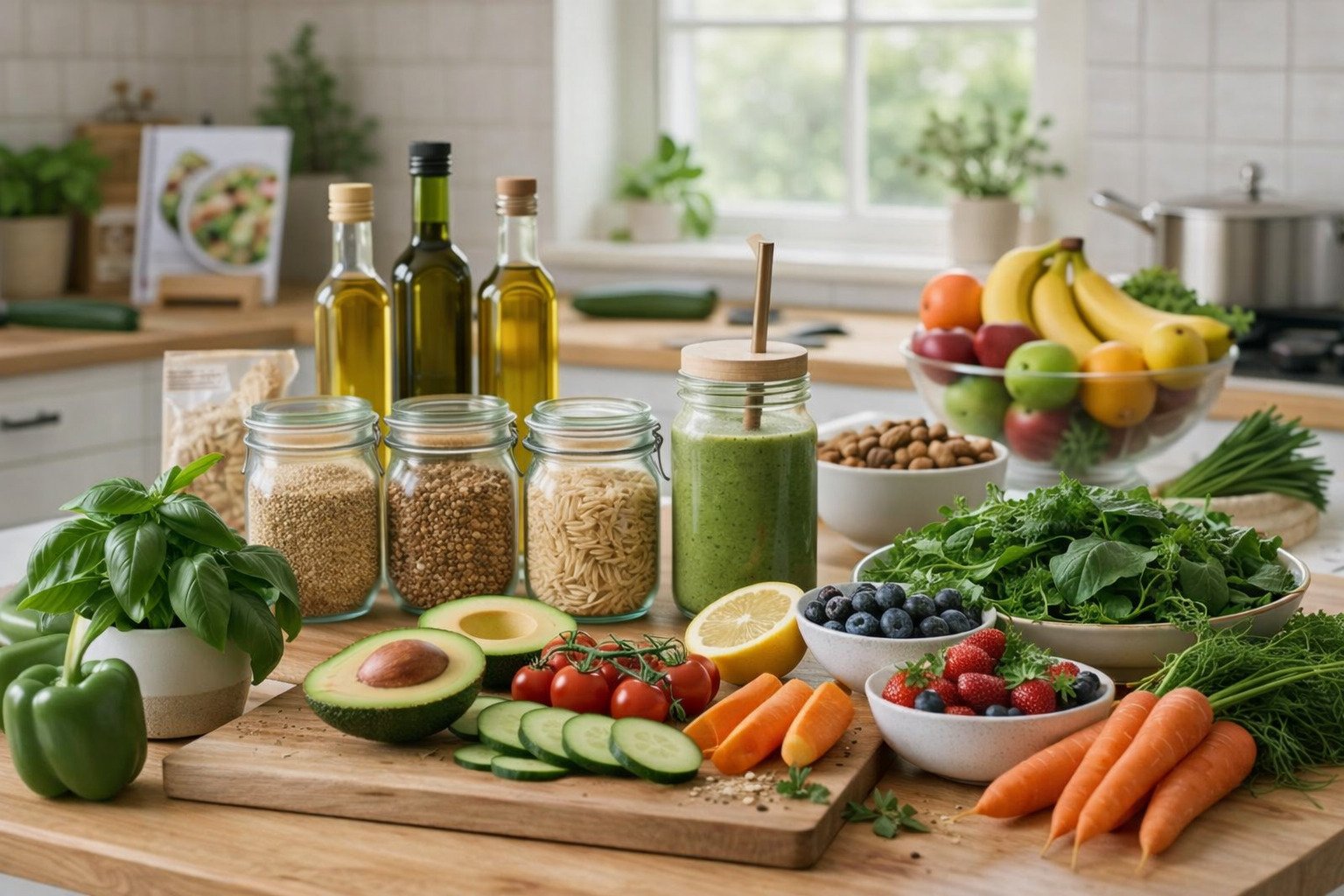
Learning to cook healthy meals at home is key to better health. Many feel scared of the kitchen, but you don’t need to be a pro to make nutritious recipes that are delicious.
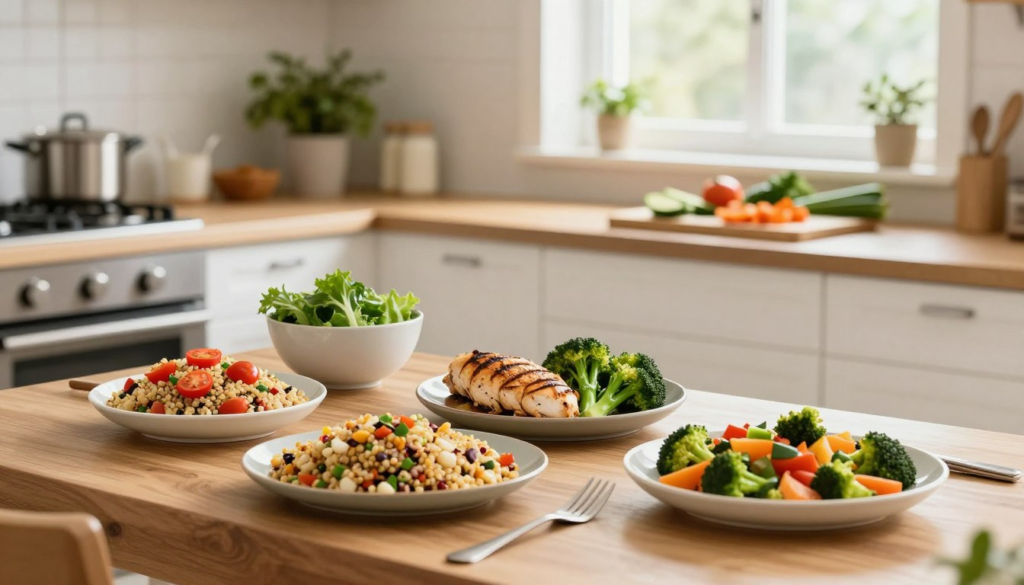
If you often feel short on time or doubt your skills, these beginner cooking tips can help. By using simple methods, you can change how you see food and cooking. It can become a part of your daily life without stress.
By using these Easy Healthy Dinner Ideas, you can start good habits that stick. Instead of seeing cooking as a task, you’ll see it as a chance to be creative and grow.
Key Takeaways
-
- Home cooking is a vital step for long-term wellness.
-
- You do not need professional skills to prepare quality food.
-
- Practical strategies help overcome common barriers like time constraints.
-
- Simple methods make cooking a sustainable lifestyle habit.
-
- Focusing on basic techniques builds confidence in the kitchen.
Essential Kitchen Staples for Nutritious Cooking
A well-organized kitchen is the secret weapon for better health. Having simple pantry staples lets you cook a meal quickly,without a last-minute store run.
For healthy eating for beginners, keep your best ingredients easy to find. A tidy kitchen helps you cook at home more often.
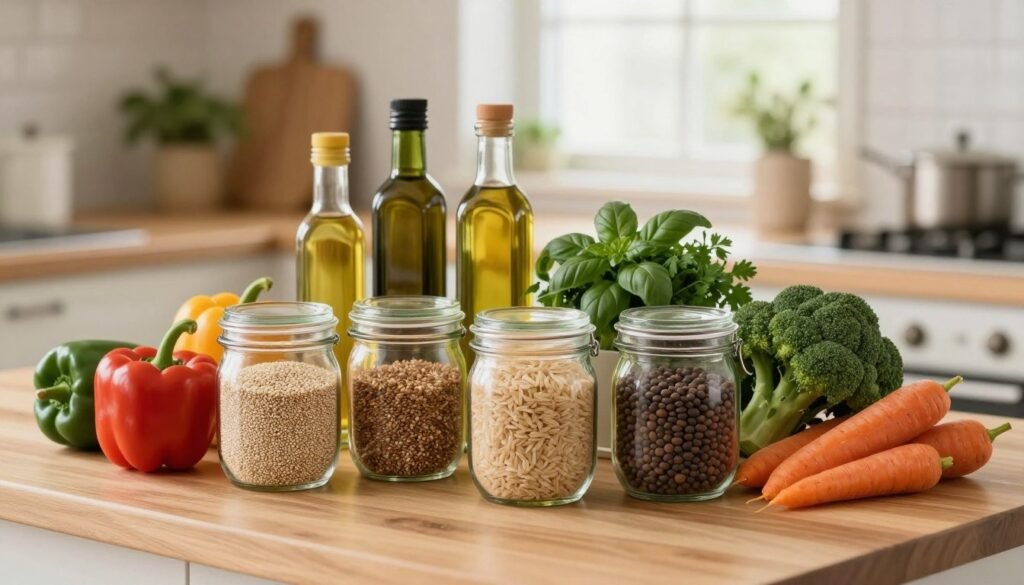
Stocking Your Pantry with Whole Grains and Legumes
Whole grains like quinoa, brown rice, and oats give you energy all day. They last a long time and are great for dinner.
Legumes, like canned black beans and lentils, are key. They’re full of plant-based protein and fiber, making meals more filling.
Keeping Healthy Proteins on Hand
You don’t need to buy meat every day for quality protein. Canned tuna, salmon, and sardines are great for omega-3s.
Eggs and nuts are also great. They add healthy fats and protein to many dishes easily.
The Importance of Fresh and Frozen Produce
Many think fresh produce is always better than frozen. But frozen veggies are often picked ripe and then frozen, keeping nutrients in.
Frozen produce is easy and affordable to add fiber to your diet. Keep frozen greens, broccoli, and berries for quick, healthy sides.
Mastering Basic Cooking Techniques for Fast Meals
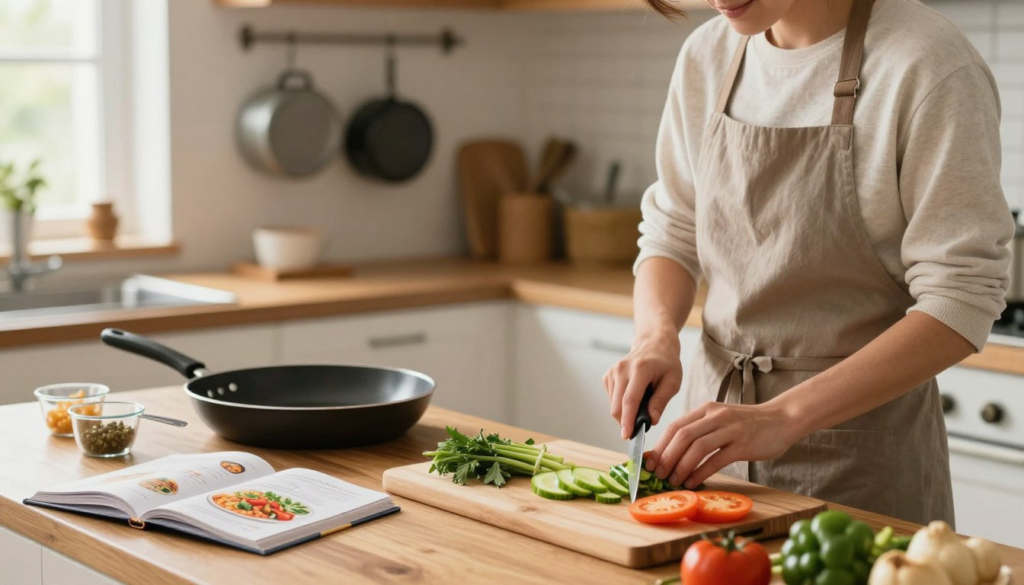
Learning a few simple cooking skills can change your weeknights. These habits help you eat well without spending hours cooking. These beginner cooking tips will boost your confidence and speed in the kitchen.
Sheet Pan Roasting for Minimal Cleanup
Sheet pan roasting is a time-saver. It lets the oven cook your food while you relax. This method is incredibly efficient because it needs little attention from you.
To get the best results, follow these simple steps:
-
- Cut vegetables into uniform sizes so they cook evenly.
-
- Line your pan with parchment paper for effortless cleanup.
-
- Toss ingredients with olive oil and your favorite seasonings before roasting.
One-Pot Stovetop Methods
One-pot meals are great for balanced dishes with less equipment. They are perfect for stews or grain-based meals. Using one pot keeps your kitchen clean.
The key is to layer your ingredients by cooking time. Start with sautéing onions and garlic, then add liquids and grains. This simple strategy ensures everything cooks evenly.
Quick Sautéing and Stir-Frying Basics
Sautéing and stir-frying are key for fast, tasty meals. They use high heat and constant stirring to keep food tender and crisp. With these beginner cooking tips, you can make a restaurant-quality dinner in minutes.
Make sure your pan is hot before adding food to prevent sticking. Keep moving your protein and vegetables to avoid burning. With practice, these methods will be the quickest way to a nutritious meal.
Planning Your Weekly Menu to Reduce Stress
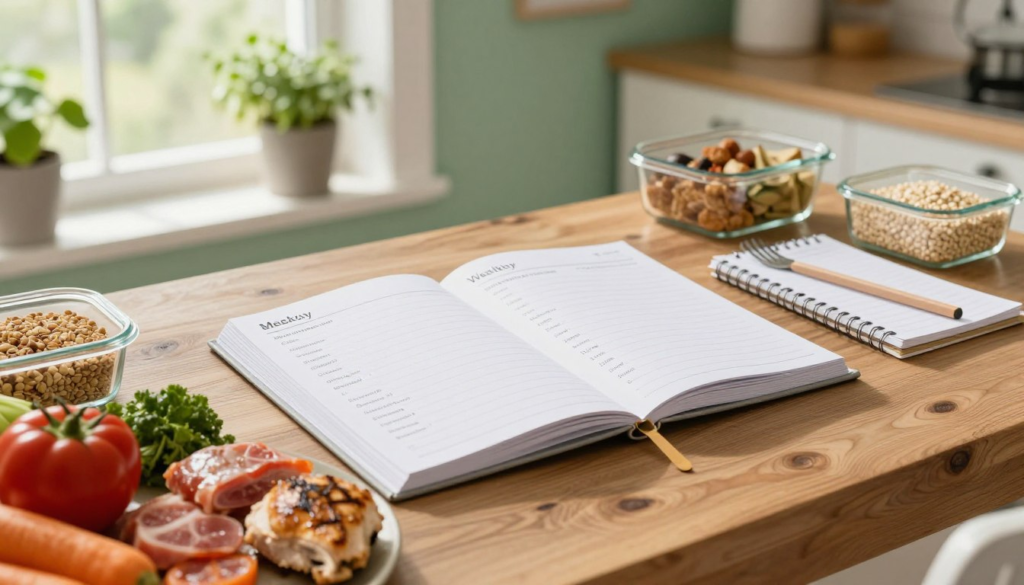
Organizing your meals can make dinner time easy and stress-free. By planning your meals ahead, you avoid the daily struggle of deciding what to eat. This way, you get the nutrients you need and enjoy stress-free cooking.
How to Create a Simple Meal Schedule
Choose a day to plan your meals for the week. Pick three to four recipes that use common ingredients to cut down on waste. Make sure your schedule works for your busiest nights, so you can have quick meals when needed.
Being consistent is key for healthy meal planning. Start simple to avoid feeling overwhelmed. Writing your menu on a calendar or using a digital app can help you stay on track.
Batch Prepping Ingredients for Busy Weeknights
Meal prep for beginners doesn’t mean spending all Sunday in the kitchen. Focus on tasks that save time, like washing veggies or cooking rice. This way, you can make a healthy dinner in no time.
“Preparation is the ultimate shortcut to success in the kitchen, turning chaotic evenings into moments of calm and nourishment.”
Store your prepped items in clear containers to keep them fresh. This makes it easy to use them before they go bad. With your basics ready, you can easily change up your meals throughout the week.
Smart Grocery Shopping Strategies
Effective healthy grocery shopping needs a plan and focus. Always bring a list to avoid buying things you don’t need. Stick to the outer aisles for fresh foods and leand proteins.
The table below shows the benefits of planning over impulse buying:
| Strategy | Benefit | Outcome |
| Weekly List | Saves Money | Reduced Waste |
| Bulk Buying | Time Efficiency | Consistent Supply |
| Seasonal Picks | Better Flavor | Lower Costs |
Focus on foods that are good for you and can be used in many meals. Keep your pantry stocked with essentials. This way, you’re always ready to cook a healthy meal, saving money and time.
Easy Healthy Dinner Ideas Using Sheet Pan Recipes
Sheet pan meals make dinner prep easy and healthy. You can cook high-quality dinners quickly and with less mess. They’re great for anyone looking for easy healthy dinner ideas that taste great every time.
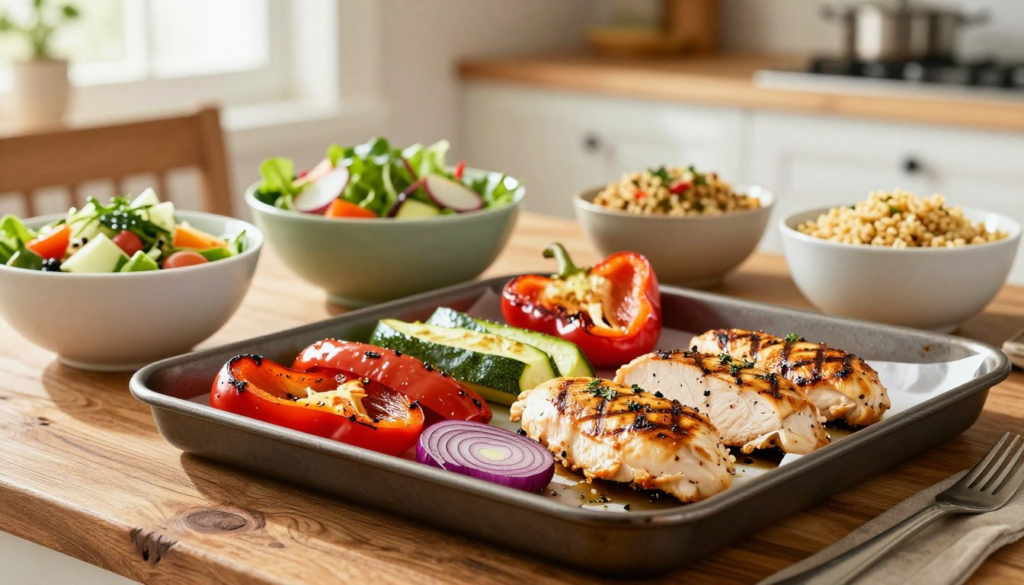
Lemon Herb Salmon with Asparagus
This dish is quick and delicious. Place salmon fillets and sparagus spears on a tray. Add olive oil, lemon juice, and herbs like dill or parsley.
Roasting them together keeps the salmon moist and asparagus crisp. These sheet pan meals are perfect for busy nights when you need a quick, healthy meal.
Roasted Chicken Thighs and Root Vegetables
Chicken thighs and root veggies make a healthy meal. Cut carrots, potatoes, and parsnips into equal pieces. Toss them in olive oil, rosemary, and salt, then arrange around the chicken.
The chicken fat makes the veggies tasty and caramelized. This method ensures your protein and sides are ready together.
Vegetarian Tofu and Broccoli Bake
For a plant-based option, try a tofu and broccoli bake. Press and cube the tofu, then mix it with broccoli in a soy-ginger glaze. Spread it on the tray and roast until crispy.
This dish shows you can have a filling, protein-rich dinner without meat. It’s a great way to try new flavors while keeping things simple.
| Recipe Name | Prep Time | Cook Time | Oven Temp |
| Lemon Herb Salmon | 5 Minutes | 12 Minutes | 400°F |
| Chicken & Roots | 10 Minutes | 35 Minutes | 425°F |
| Tofu & Broccoli | 8 Minutes | 20 Minutes | 400°F |
Nutritious One-Pot Meals for Beginners
Beginners find that nutritious recipes are simple when using one pot. One-pot cooking boosts flavor and cuts down on cleanup. It’s a quick way to make tasty meals with less effort.
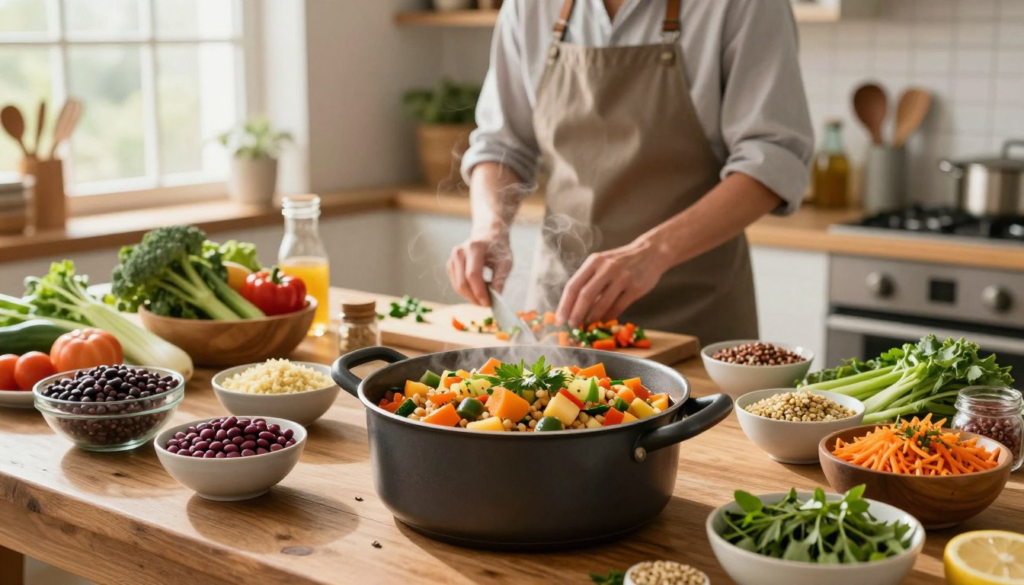
Hearty Lentil and Vegetable Soup
Lentils are a great plant-based protein that’s affordable and lasts long. Start by sautéing onions, carrots, and celery. Then add lentils and broth. Let it simmer until the lentils are soft for a wholesome meal.
Quick Quinoa and Black Bean Skillet
This dish is fast thanks to quinoa and canned black beans. Mix them with tomatoes, corn, and taco seasonings in a skillet. It’s a quick, balanced meal with lots of fiber.
One-Pot Whole Wheat Pasta with Spinach and Tomatoes
Cooking pasta in the sauce makes it flavorful. Add pasta, tomatoes, garlic, and broth to your pot. Let it thicken. Then add spinach for a vitamin boost in these nutritious recipes.
| Meal Type | Primary Protein | Cooking Time | Key Benefit |
| Lentil Soup | Lentils | 30 Minutes | High Fiber |
| Quinoa Skillet | Black Beans | 20 Minutes | Fast Prep |
| Pasta Bake | Whole Wheat | 15 Minutes | Minimal Cleanup |
Time-Saving Tips for Faster Dinner Preparation
Being efficient in the kitchen starts before you turn on the stove. By improving your workflow, you can make quick dinner preparation easier. Small changes can make a big difference in your cooking time.
Utilizing Pre-Cut Vegetables and Convenience Items
Many cooks think they must chop every ingredient from scratch. But using pre-cut veggies or bagged greens is a smart move. These items save time and keep nutrients high.
Check out frozen vegetable medleys or pre-washed produce at your local store. They’re great for busy nights. These shortcuts can greatly improve your cooking speed.
Proper Knife Skills to Speed Up Chopping
Learning basic knife skills is key for beginners. Holding your knife right and chopping smoothly makes you faster and safer. Consistent cuts also help your food cook evenly.
Try the “claw” grip to protect your fingers. Move smoothly and don’t rush. With practice, you’ll chop faster and more confidently.
Setting Up Your Miseen Place
Mise en place means “everything in its place.” Before cooking, gather all ingredients, measure spices, and prepare tools. This habit keeps you calm and prevents panicking.
Organizing your space helps you focus on cooking. By using these time-saving kitchen hacks, you’ll make your kitchen more efficient. These steps will help you enjoy quick dinner prep.
Adapting Recipes to Fit Your Dietary Needs
Many classic dishes can be made dietary-friendly with a few simple swaps. This lets you stay healthy while enjoying your favorite flavors. By learning to substitute ingredients, you can cook for any dietary need with confidence.
Swapping Ingredients for Gluten-Free Options
Removing gluten doesn’t mean losing flavor or texture. You can swap traditional wheat pasta for high-quality alternatives that work well in sauces.
-
- Rice noodles are great for stir-fries and Asian dishes.
-
- Quinoa is a versatile, protein-rich base for bowls or salads.
-
- Gluten-free pasta made from chickpeas or brown rice feels like regular pasta.
Plant-Based Protein Substitutions
Adding plant-based proteins boosts fiber and cuts saturated fat. These options are often cheaper and quicker to cook than meat, perfect for weeknights.
Here are some easy swaps for dietary-friendly recipes in your kitchen:
-
- Use lentils in soups or stews for a rich, iron-packed texture.
-
- Try firm tofu in stir-fries for a flavorful, protein-rich dish.
-
- Add black beans to skillet meals for a plant-based protein boost.
Adjusting Seasonings for Low-Sodium Diets
Lowering salt intake doesn’t mean your food has to be bland. Use fresh ingredients to create bold flavors without pre-packaged blends high in sodium.
Here’s how to keep your meals tasty:
-
- Add fresh herbs like cilantro, basil, and parsley at the end for a bright finish.
-
- Use citrus zest or fresh lemon juice to enhance flavors of vegetables and proteins.
-
- Try aromatic spices like smoked paprika, cumin, or garlic powder for depth without salt.
Mastering these adjustments ensures your dietary-friendly recipes are both healthy and delicious for all at your table.
Conclusion
Learning to cook at home changes how you see food. You get to choose what goes into your meals. This saves you money on takeout from places like HelloFresh or Blue Apron.
With time, cooking becomes easier. Soon, making healthy dinners won’t feel like a burden. It will be a part of your day that you enjoy.
Begin by trying a new recipe each week. Even small changes can make a big difference in your health and energy.
Your kitchen is a place for creativity and growth. Focus on simple cooking methods. This way, your meals stay tasty and easy to make.
Don’t be shy to share your cooking successes with others. Building a community around healthy eating makes it more fun for everyone.
FAQ
What are the best healthy dinner ideas for someone with no cooking experience?
Start with nutritious recipes that are easy to make. Try sheet pan meals or one-pot stovetop methods. These methods are simple and let you focus on basic cooking skills.
Begin with dishes like Lemon Herb Salmon or Vegetarian Tofu Bake. They help you build confidence and start healthy habits.
Which pantry staples are essential for preparing quick, wholesome meals?
Keep your kitchen stocked with essentials. Include whole grains like quinoa and brown rice. Also, I have legumes like lentils and canned beans from Goya.
These items are rich in fiber and can be turned into meals quickly. Don’t forget extra virgin olive oil and dried herbs for flavor and health.
Is frozen produce as nutritious as fresh vegetables?
Yes, frozen vegetables are just as nutritious as fresh ones. They’re frozen at peak ripeness, keeping their nutrients. They’re also cost-effective and convenient.Using frozen broccoli or spinach from Bird’s Eye is a great time-saving tip for quick meals.
How can I reduce the time spent cleaning up after cooking?
Use sheet pan roasting or one-pot recipes to cut down on cleanup. Sheet pan roasting cooks everything on one tray. This includes your protein and root vegetables.One-pot whole wheat pasta dishes cook noodles and sauce together. This reduces dishes and makes weeknight dinners easier.
What is the most effective way to plan a weekly menu on a budget?
Plan a realistic meal schedule and shop smart. Buy seasonal produce and bulk ingredients at places like Costco or Aldi.Batch prep ingredients like washing greens or pre-cooking black beans. This saves time and keeps you within budget while eating healthy.
How can I speed up my dinner preparation on busy weeknights?
Use pre-cut vegetables and follow mise en place. Mise en place means organizing ingredients before cooking. This makes your kitchen more productive.Improving your knife skills and using convenience items like pre-washed kale or minced garlic can save minutes.
What are some easy plant-based protein substitutions for meat-heavy recipes?
Swap animal proteins for plant-based protein substitutions like tofu, tempeh, or chickpeas. For example, a Quick Quinoa and Black Bean Skillet is a complete protein source with more fiber and less saturated fat.Try Barilla Chickpea Pasta for a protein-rich, gluten-free meal.
How can I make my meals flavorful if I am on a low-sodium diet?
Use fresh herbs, citrus juices, and vinegars to add flavor without salt. Lemon zest, fresh ginger, and garlic offer bold tastes without salt.Try Mrs. Dash seasoning blends or balsamic vinegar for depth in roasted vegetables and grilled proteins. This supports your cardiovascular health.
