

Managing your health during a busy work week can be tough. When time is short, you might grab unhealthy snacks. But, using low carb meal prep recipes can help you stay on track.
By planning your meals ahead, you avoid quick, bad choices. This keeps your nutritional intake consistent even on the busiest days. It’s a key way to meet your long-term health goals.
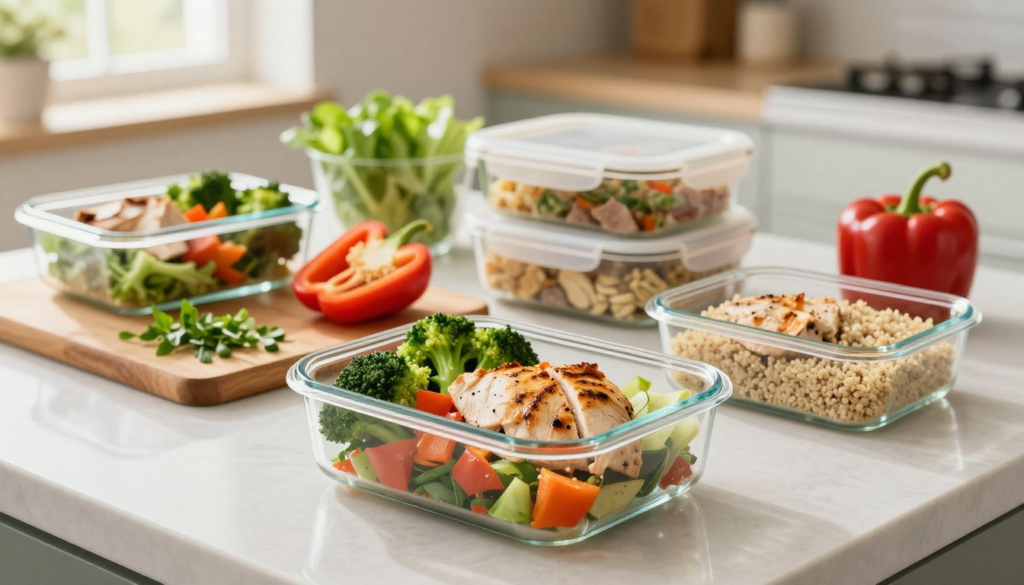
By taking control of your kitchen, you make a weight loss diet easier to follow. Healthy options are ready when you need them. Start small, stay consistent, and see your progress grow.
Key Takeaways
-
- Planning ahead eliminates the stress of daily cooking decisions.
-
- Consistent habits prevent impulsive snacking during busy work hours.
-
- Structured eating supports your health goals more effectively.
-
- Simple kitchen routines save you valuable time every week.
-
- Preparation is the foundation of a sustainable lifestyle change.
The Foundatios of Low Carb Meal Prep
Starting your nutrition journey is all about setting a clear goal for your health. Having a solid plan is key to making lasting changes. By focusing on healthy meal planning, you can create meals that meet your specific needs for weight loss success.
Defining Your Weight Loss Goals
Before you start cooking, you need to know what your body needs. A good approach is to figure out your daily calorie needs and adjust your food intake. This makes sure your ketogenic meal prep stays on track and effective.
Setting achievable goals keeps you motivated. Clear targets help you make better choices for your health and happiness.
Selecting Low Carb Ingredients
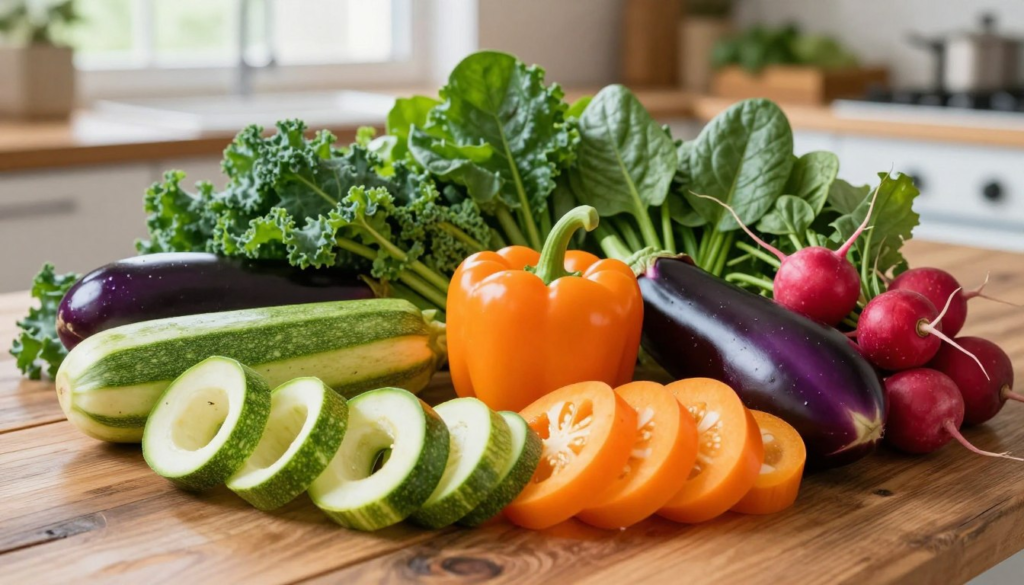
The quality of your food affects your results. Choose foods that are rich in nutrients and keep you full. Adding a variety of low carb vegetables gives you the fiber and vitamins you need.
The table below shows key ingredients for your weekly meals:
| Ingredient Category | Primary Benefit | Preparation Tip |
| Leafy Greens | High Fiber Content | Wash and dry immediately |
| Cruciferous Veggies | Nutrient Density | Roast for better flavor |
| Healthy Fats | Sustained Energy | Use for cooking or dressings |
| Lean Proteins | Muscle Maintenance | Batch cook in advance |
Choosing these ingredients helps you build a flexible meal plan. Remember, it’s more important to be consistent than perfect. Stick to simple, whole foods for lasting success.
Essential Kitchen Tools and Pantry Staples
Turning your kitchen into a place for healthy meals needs the right tools and ingredients. Having the right setup makes your daily meals easy. It helps you stick to your diet goals all week.
Must-Have Storage Containers
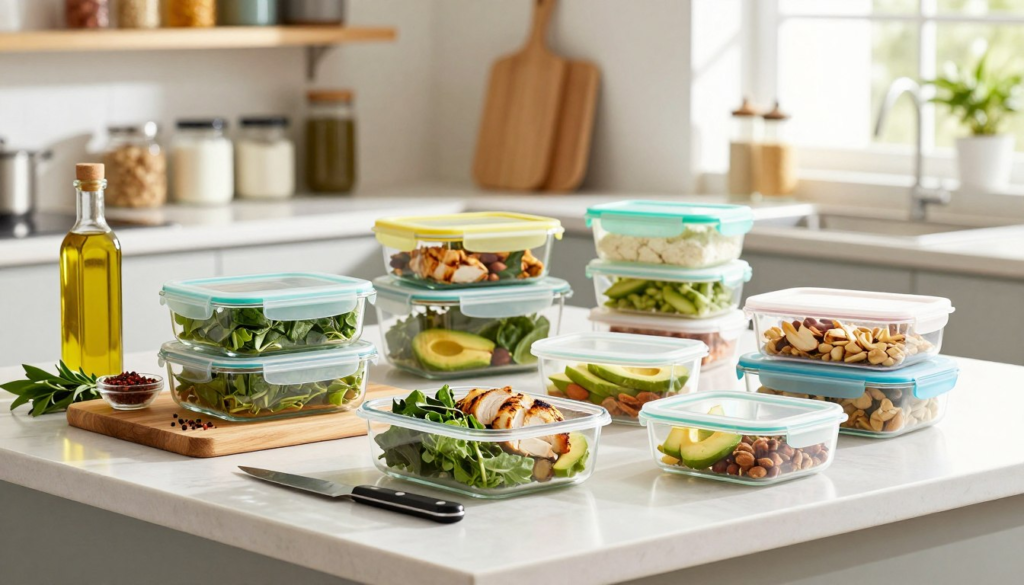
Getting meal prep containers that are top-notch is a big plus. Look for glass or BPA-free plastic that’s airtight and leak-proof. These containers keep your food fresh and make it easy to grab a meal when you’re busy with ketogenic meal prep.
It’s smart to get different sizes for various portions. Containers that are safe for the microwave and dishwasher save time. Good storage keeps your food’s taste and texture just right.
Stocking Your Low Carb Pantry
A well-stocked kitchen helps you avoid bad food choices. Keeping low carb pantry staples ready means you can make a healthy meal fast. Focus on items that are versatile for many recipes.
-
- Almond flour and coconut flour for baking
-
- Unsweetened nut milks
-
- Canned tuna, salmon, and sardines
-
- Seeds like chia, flax, and hemp hearts
Healthy Fats and Oils
Adding healthy fats for weight loss is key for energy. These fats help you stay full and support your metabolism. Keep good oils and fats ready for cooking or dressing your meals.
Use extra virgin olive oil, avocado oil, and coconut oil for cooking or dressing. Grass-fed butter or ghee adds flavor. These fats fuel your body well.
Low Carb Seasonings and Spices
Good flavor makes meals enjoyable without feeling limited. A good low carb grocery list includes many herbs and spices. They help turn simple foods into tasty dishes.
Fill your spice rack with garlic powder, smoked paprika, cumin, and dried oregano. Avoid seasonings with hidden sugars or fillers. Trying new flavors keeps your healthy eating exciting and lasting.
Step-by-Step Guide to Low Carb Meal Prep Recipes
Changing your kitchen habits starts with a clear plan for your meals. Organizing your approach makes sure your low carb meal prep recipes are tasty and help you lose weight.
Planning Your Weekly Menu
Good healthy meal planning means looking at your schedule before shopping. Pick days when you’re busy for quick meals.
Write down your menu to avoid choosing bad snacks. Knowing what you’ll eat helps you stay on track.
Efficient Grocery Shopping Strategies
Organize your low carb grocery list by store section before you go. This helps you avoid buying things that aren’t good for you.
Shop the store’s edges for fresh foods. This ensures you get the right stuff for a high protein low carb diet.
Batch Cooking Techniques
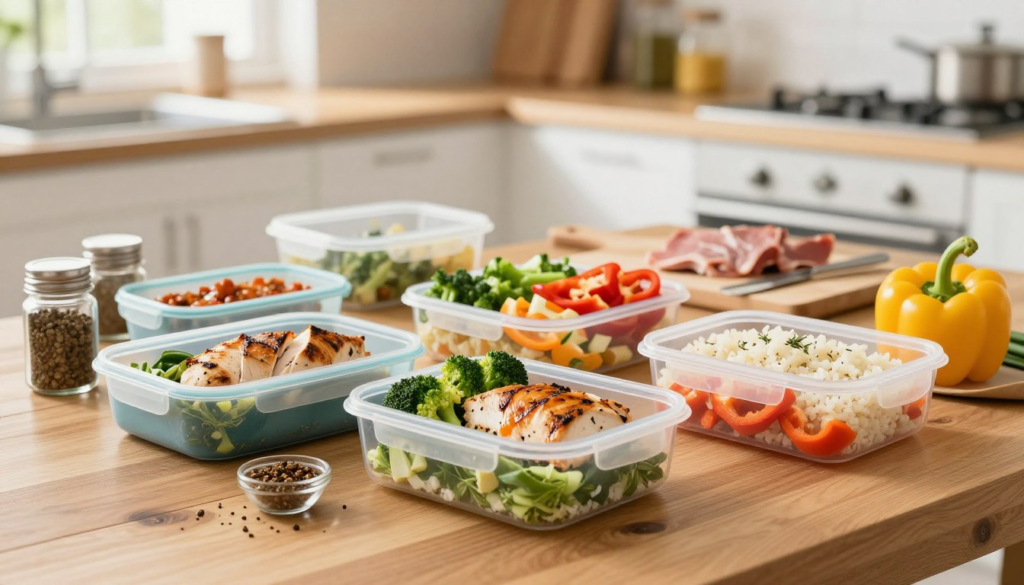
Learning batch cooking tips saves kitchen time. Spend a few hours on your day off cooking big batches of protein and veggies.
Sheet Pan Roasting Methods
Sheet pan roasting is great for flavor and less cleanup. Just mix your favorite veggies and proteins with olive oil and seasonings, then spread them on a baking sheet.
This method cooks many servings at once. It’s perfect for making healthy meals without spending hours cooking.
One-Pot Meal Preparation
Adding one-pot meals to your routine is key for meal prep time management. Soups, stews, and skillet scrambles are great because they’re easy to make and clean up.
These dishes taste even better the next day. Using these methods helps you stick to your diet and saves time.
Balancing Macronutrients for Weight Loss
Getting to your ideal weight loss diet is more than cutting calories. It’s about balancing proteins, fats, and carbs. This balance keeps your energy steady all day. It also helps you feel full and lose weight.
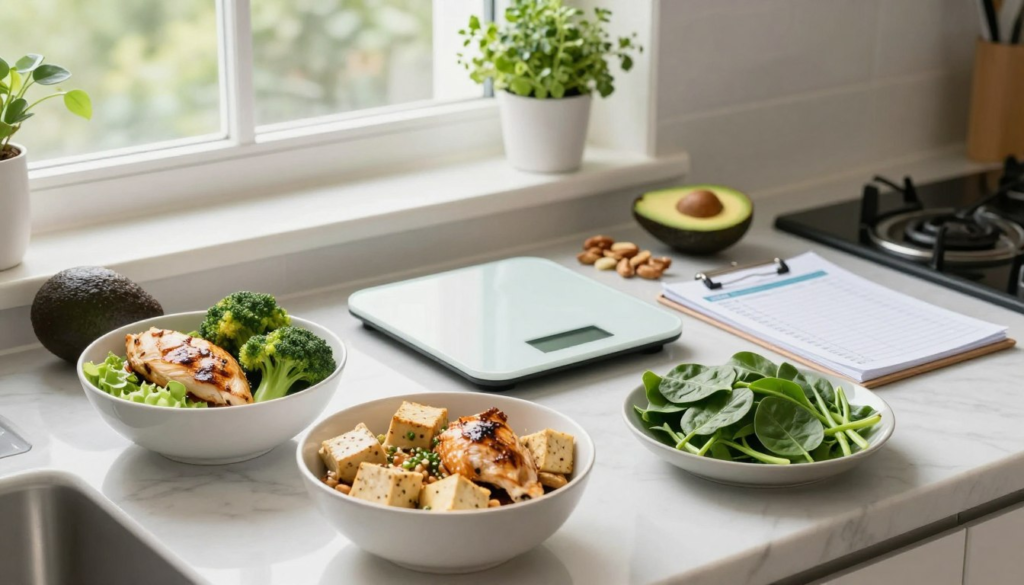
Prioritizing High-Quality Proteins
Protein is key in a high protein low carb diet. It helps keep your muscles strong, which is important for a healthy metabolism.
Eat lean proteins like chicken, salmon, tofu, or grass-fed beef. These foods give your body the amino acids it needs after working out. Prioritizing protein keeps you full, so you don’t snack as much.
“The secret of getting ahead is getting started, and the secret of getting started is breaking your complex tasks into small, manageable tasks.”
Incorporating Non-Starchy Vegetables
Fill your plate with low carb vegetables to boost your nutrient intake. These plants are full of fiber, vitamins, and minerals that are good for you.
Make sure to include these in your meals:
-
- Spinach and kale for essential iron and folate.
-
- Broccoli and cauliflower for fiber and antioxidants.
-
- Zucchini and bell peppers for versatility in stir-fries.
Managing Healthy Fat Intake
Healthy fats are important for weight loss, but they’re often misunderstood. They help balance your hormones and give you energy all day.
Choose whole foods like avocados, nuts, seeds, and olive oil. They’re high in calories but very filling when eaten in the right amounts. Keeping track of your macronutrient intake helps you find the perfect balance for your body.
Storage and Food Safety Best Practices
When you focus on meal prep safety, you keep yourself healthy and on track with your goals. Handling food right keeps your meals fresh and safe to eat all week. By following the right storage rules, you avoid spoilage and stay on your nutrition plan.
Proper Cooling and Refrigeration
Keeping food out of the “danger zone” is key to safety. This zone is between 40°F and 140°F. Bacteria grow fast here, so cool food quickly and refrigerate it fast. Never let hot meals sit out for more than two hours.
Use top-notch meal prep containers that seal tight. Glass is great because it doesn’t hold smells and is safe for the microwave and dishwasher. Make sure your fridge is at 40°F or lower to keep your food good.
Freezing Meals for Long-Term Success
Freezing is best for food that lasts more than four days for weight loss success. Divide meals into single servings before freezing. This makes it easy to grab what you need without thawing a whole batch.
To stop freezer burn, squeeze out air from bags or containers. Wrap portions in parchment paper before freezing. Labeling containers with the date helps you use the oldest first.
Reheating Without Losing Texture
Reheating food right is as important as cooking it. Use a bit of water or broth in the microwave to keep veggies and proteins moist. This trick stops your food from drying out.
For better results, reheat on the stovetop or in the oven when you can. This method keeps roasted veggies and proteins tender. Keeping your meals consistent helps you stay on track with your goals.
| Food Category | Fridge Life | Freezer Life | Best Reheat Method |
| Cooked Proteins | 3-4 Days | 2-3 Months | Stovetop/Pan |
| Roasted Vegetables | 3-4 Days | 1-2 Months | Oven/Air Fryer |
| Fresh Salads | 1-2 Days | Not Recommended | Serve Cold |
| Soups/Stews | 4-5 Days | 3-4 Months | Stovetop |
Overcoming Common Meal Prep Challenges
Reaching your nutrition goals is more than just planning. It’s about being ready for surprises. Even the most committed people face hurdles, but learning to adjust is key. By preparing for common issues, you can keep moving forward, no matter your schedule.
Avoiding Flavor Fatigue
Getting bored with the same meals is common. To keep things interesting, try rotating your spice blends and adding fresh herbs. A simple chicken breast can taste completely new with different seasonings.
Having a variety of sauces can instantly change your meals. Use low carb pantry staples like sugar-free hot sauce or pesto. This small tweak keeps you satisfied and on track.
Managing Time Constraints
When life gets busy, cooking often falls by the wayside. Good meal prep time management is crucial. Instead of spending hours cooking, focus on tasks that save time later.
Use smart batch cooking tips to make your work easier. For example, roasting vegetables or cooking a big batch of protein on Sunday can save time. These habits prevent you from ordering takeout when you’re tired.
Handling Social Situations and Dining Out
Social events and eating out don’t have to ruin your diet. You can enjoy dining out by tracking macronutrients to fit your daily needs. Opt for grilled proteins and steamed veggies, common at most places.
If you’re unsure about a menu, check it online first. Staying healthy doesn’t mean avoiding friends or family. With mindful choices and reliable low carb pantry staples, you can handle any social situation confidently.
Conclusion
Starting your health journey is as simple as planning your meals for the week. You can reach your weight loss goals by organizing your kitchen. Small habits can lead to big changes in your life.
Keeping your meals safe and fresh is key. Use top-notch containers from brands like Pyrex or Rubbermaid. This way, your food stays good and healthy all week.
Start by making a few meals this weekend. Small steps can add up to big results. You have everything you need to succeed. Begin your new routine today and thank yourself later.
FAQ
How do low carb meal prep recipes for weight loss help me stay consistent?
Low carb meal prep recipes help you stay on track, even when you’re busy. By preparing your meals ahead of time, you control what you eat. This keeps your diet consistent and helps you manage your health better.
What are the best low carb vegetables to include in my ketogenic meal prep?
For ketogenic meal prep, choose low carb veggies like kale, zucchini, broccoli, and bell peppers. These veggies are full of nutrients and fiber. They help keep your diet low in carbs, which is key for weight loss.
Which storage containers are best for maintaining meal freshness?
Use top-notch containers from brands like Pyrex or Glasslock to keep your meals fresh. Airtight glass containers are best for safety and freshness. They prevent bacteria and are safe for reheating.
How can I improve my meal prep time management?
Improve your meal prep time by using batch cooking methods. Try sheet pan roasting and one-pot meals. Cooking in an Instant Pot or Lodge cast iron skillet saves time and makes high protein meals easy.
What are the essential healthy fats for weight loss I should keep in my pantry?
Stock up on healthy fats like Kerrygold butter, extra virgin olive oil, and avocado oil. These fats give you energy and help you feel full. They’re key for your metabolic health.
How do I handle macronutrient tracking when prepping meals?
Track macronutrients by focusing on high-quality proteins and healthy fats. Plan your meals to meet your calorie and weight loss goals. This way, you can stay on track with your diet.
What is the best way to avoid flavor fatigue during the week?
To avoid flavor fatigue, mix up your seasonings and spices. Try different proteins and keep a variety of spices on hand. This way, you can make the same ingredients taste different, making dieting easier.
How can I safely freeze and reheat my prepared meals?
For safe freezing, cool and refrigerate meals first. Reheat on low to keep flavors and textures intact. This prevents veggies from getting soggy.
