

Reaching your health goals can seem daunting, but the key is in your kitchen. A regular weight loss meal prep routine is the base for lasting health. It lets you control what you eat every day.
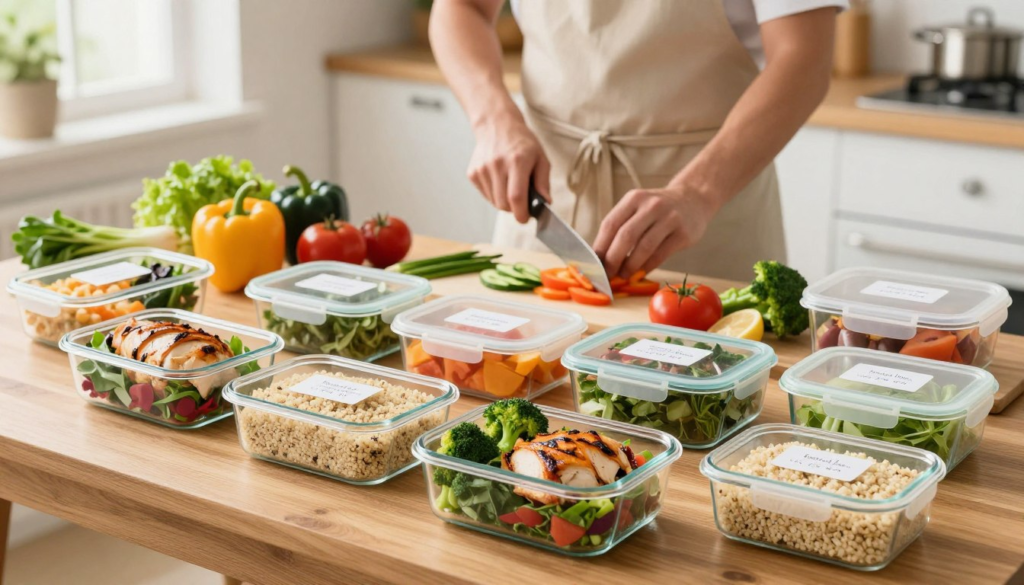
Planning your meals cuts down on the urge to snack on impulse. This method keeps your calorie intake steady, easing the daily stress of meal choices. Learning meal prep for weight loss means you can feed your body with the best foods.
Being consistent is key to weight loss success. Changing your habits sets up a lasting plan for your health journey. This guide will help you make your kitchen a key player in your health.
Key Takeaways
-
- Planning your food in advance prevents impulsive eating habits.
-
- Maintaining a caloric deficit becomes easier with structured routines.
-
- Consistency is the most important factor for achieving lasting results.
-
- Organized kitchens reduce daily stress and decision fatigue.
-
- Intentional eating habits empower you to reach your wellness goals.
Setting the Foundation for Weight Loss Meal Prep
Starting a successful routine is more than just cooking. You need to know your body’s energy needs first. This makes your weight loss diet plan easier to follow and less stressful.
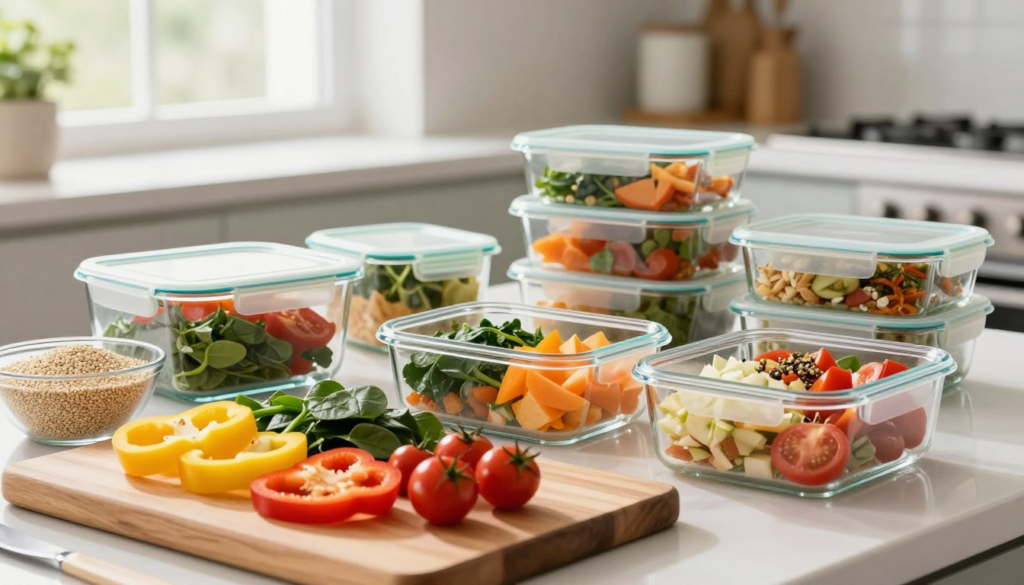
Defining Your Caloric and Nutritional Goals
Start by figuring out how many calories you need. Use a calorie counting guide to find out. This way, you know exactly how much food your body needs.
It’s important to balance your macronutrients. This keeps your energy levels steady all day. Knowing your targets helps you create a weight loss diet plan that fits your lifestyle.
Establishing a Realistic Weekly Schedule
Being consistent is key to success. Plan your healthy meal planning around your busy week. Pick days when you have more time to cook.
You don’t need to spend all Sunday cooking. Find small times in your day to prep meals. This makes your goals feel reachable, not too hard.
Essential Tools and Kitchen Organization
Having the right tools in your kitchen makes it easier to lose weight. The right gear helps keep things clean and makes cooking less stressful. Quality items turn your kitchen into a place for healthy living.
Selecting the Right Food Storage Containers
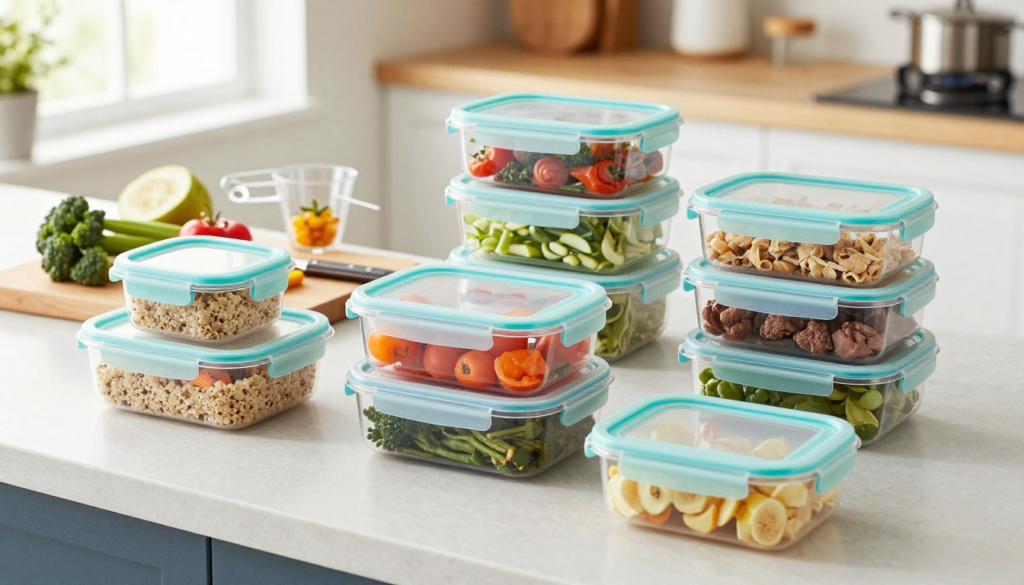
Choosing the best meal prep containers is key. Look for ones that are durable, leak-proof, and easy to clean. Glass containers are great because they don’t stain or hold smells.
If you like something lighter, BPA-free plastic is a good choice. Make sure your containers stack well to save fridge space. This keeps your food fresh all week.
| Material | Durability | Best Use |
| Glass | High | Oven and Microwave |
| BPA-Free Plastic | Medium | On-the-go Meals |
| Stainless Steel | Very High | Cold Salads |
Must-Have Kitchen Gadgets for Faster Prep
Having the right gadgets makes cooking faster. Smart kitchen organization ideas save you a lot of time. A sharp knife, a sturdy board, and a fast blender are must-haves.
Using Digital Scales for Accurate Portion Control
Being precise is crucial for weight loss. A digital scale lets you measure food exactly. This helps you stick to your calorie goals.
With these tools and kitchen organization ideas, you set yourself up for success. A clean kitchen and easy-to-reach meal prep containers make healthy eating easy.
Planning Your Weight Loss Menu
A well-structured menu is key to your long-term nutritional success. It helps you avoid daily food stress and ensures every meal supports your goals. Healthy meal planning is the best way to stay on track with your weight loss.
Balancing Macronutrients for Sustained Energy
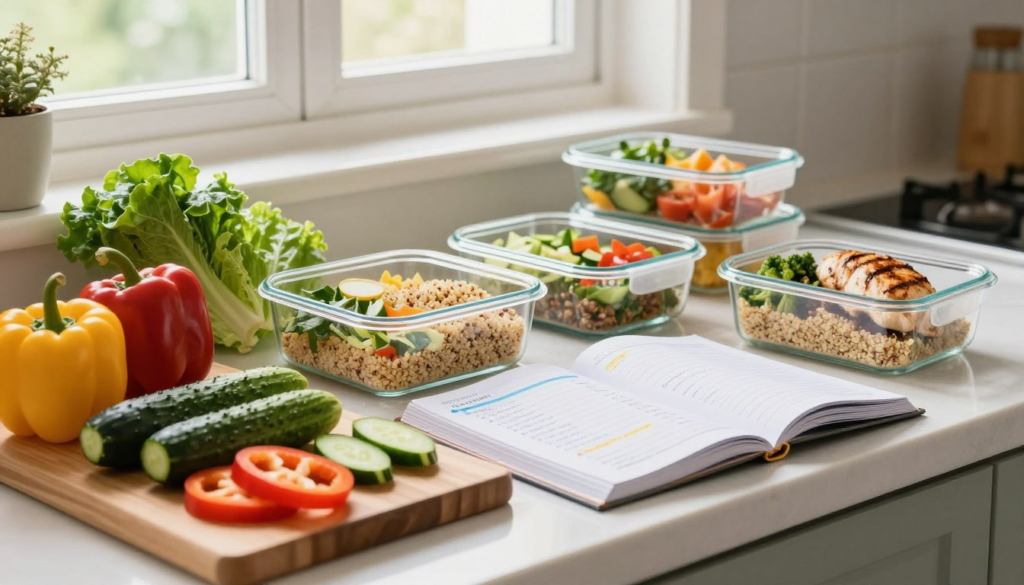
Getting the right macronutrient balance is crucial for steady energy. Mixing lean proteins, complex carbs, and healthy fats stops energy crashes. This keeps you full and focused all day.
“The secret to long-term health is not found in restriction, but in the intentional balance of the nutrients you provide your body.”
Creating a Rotating Menu to Prevent Boredom
Staying with the same meal every day can get boring. To keep things interesting, try different meal prep recipes with simple ingredient swaps. A rotating menu keeps your diet varied and your kitchen exciting.
-
- Rotate your protein sources between chicken, tofu, and legumes.
-
- Use different spice blends to transform basic grains into new experiences.
-
- Keep a list of your favorite meal prep recipes to cycle through every month.
Incorporating Seasonal Produce for Better Flavor
Using seasonal fruits and veggies boosts your meal’s flavor without breaking the bank. Produce at its peak tastes better and is more nutritious. Focusing on what’s in season helps you maintain a balanced diet and enjoy the freshest ingredients.
Efficient Grocery Shopping Strategies
Learning to shop smart is a key weight loss strategy. It changes how you eat. With a clear plan, you avoid making bad food choices. This turns shopping into a health boost.
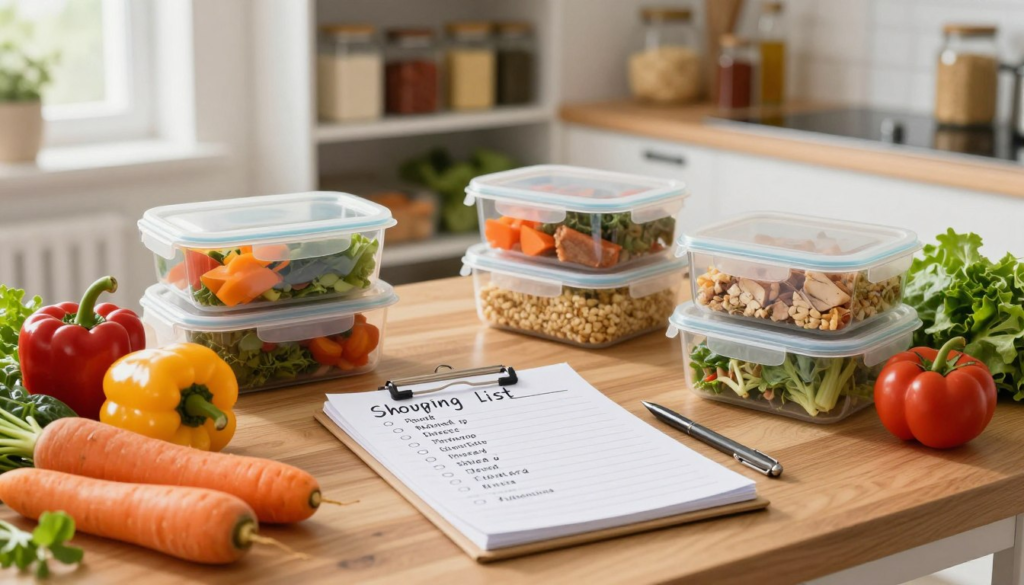
Mastering the Art of the Master Grocery List
A good grocery shopping list is essential. Instead of aimlessly browsing, organize your list by section. This makes your meal prep efficiency better by only buying what you need.
Keep your list on the fridge all week. Add items as you run out to avoid last-minute rushes. This keeps your kitchen ready for your meals.
Navigating the Perimeter of the Supermarket
Most stores try to sell you processed foods in the middle. To stay on track, shop the outer aisles. There, you’ll find fresh foods and lean meats.
Shopping the edges helps you buy better foods. It makes your trip easier and keeps your meals healthy. This boosts your meal prep efficiency and avoids bad additives.
Avoiding Impulse Buys That Derail Your Progress
Impulse buys can ruin your diet. Shop when you’re not hungry or tired. Stick to your grocery shopping list and ignore tempting displays.
| Shopping Habit | Impact on Progress | Result |
| Shopping without a list | High impulse buying | Poor nutrition |
| Perimeter shopping | Focus on whole foods | Better health |
| Pre-planned list | Increased efficiency | Time savings |
Consistency is crucial for these habits. Staying disciplined at the store helps your progress. It makes cooking easier each week.
Step-by-Step Cooking and Portioning Techniques
Streamlining your cooking saves time and keeps your diet healthy. By learning healthy cooking techniques, you can cook large amounts quickly. This way, you always have healthy food ready when you need it.
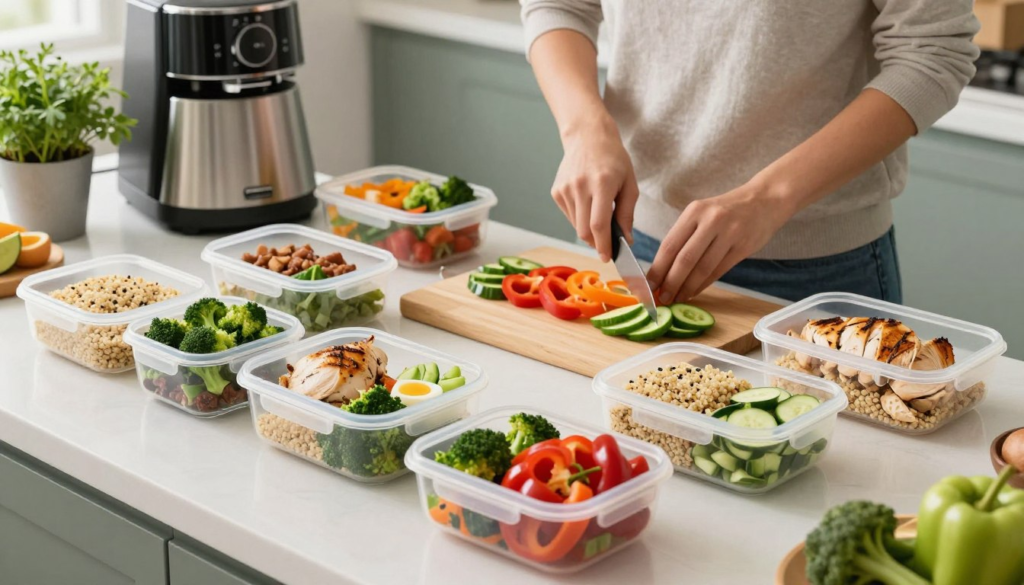
Batch Cooking Proteins and Complex Carbohydrates
High-volume staples are key for batch cooking tips. Start by roasting several chicken breasts or baking a large tray of tofu. At the same time, boil a big pot of quinoa or brown rice for complex carbs.
These items are the base of your weekly meals. Having them ready lets you make different meals without starting from scratch every day. This is a key part of meal prep for weight loss.
Utilizing Sheet Pan Meals for Hands-Off Cooking
Sheet pan meals boost your efficiency and keep your diet clean. Just mix your favorite veggies and lean proteins with olive oil and spices on a baking sheet. This healthy cooking technique lets you do other things while your food cooks.
You can make several trays at once for dinners over several days. The oven does the hard work, so you can focus on other things. It’s a simple way to stay healthy.
Portioning Meals Immediately After Cooking
Consistency is key when aiming for health goals. You should portion your meals immediately after they cool a bit. This keeps your servings even all week. Using the same containers helps avoid overeating and keeps calories in check.
By following these batch cooking tips, you avoid unhealthy snacks. Organizing your portions right away helps you stay on track with your meal prep for weight loss goals.
Proper Storage and Food Safety Guidelines
Learning about food storage safety is key to keeping your meal prep fresh all week. When you cook, you want every bite to taste as good as when you first made it. By following food safety guidelines, you can manage your kitchen better and cut down on waste.
Understanding Refrigerator and Freezer Shelf Life
It’s important to know how long your meals stay good. Cooked proteins and veggies usually last three to four days in the fridge. For longer storage, the freezer is best for keeping nutrients and flavors.
Always mark your containers with the cooking date. This simple step helps you know which meals to eat first during a busy week.
Reheating Methods to Maintain Food Texture
Reheating is as crucial as cooking to keep food tasty. Use a toaster oven or oven for roasted veggies and proteins to avoid sogginess. If microwaving, add a bit of water or broth to keep food moist.
Consistency is key for keeping your prepped ingredients fresh. The right reheating method ensures your meals stay fresh, not overcooked or rubbery.
Preventing Cross-Contamination in Your Fridge
Keeping your fridge clean is essential for food storage safety. Store raw meats on the bottom shelf to avoid juices from getting on ready-to-eat meals. Use airtight containers to prevent odors from spreading between dishes.
| Food Category | Fridge Life | Freezer Life | Storage Tip |
| Cooked Poultry | 3-4 Days | 3-4 Months | Keep airtight |
| Cooked Beef/Pork | 3-4 Days | 2-3 Months | Slice before freezing |
| Cooked Vegetables | 3-5 Days | 1-2 Months | Cool before sealing |
| Soups and Stews | 3-4 Days | 2-3 Months | Use portion bags |
Following these food safety guidelines helps you keep your fridge organized. Regular meal prep storage habits keep you healthy and ensure tasty, safe meals every day.
Conclusion
Mastering weight loss meal prep is a key step in your health journey. It makes your daily choices easier and reduces stress. No more scrambling for what to eat.
By planning ahead, you control your nutrition. Small steps in the kitchen lead to big changes in your health. These habits will last for years.
Consistency is key to reaching your goals. You don’t have to be perfect to see progress. Celebrate every small victory along the way.
Your kitchen is the heart of your success. Keep it tidy and stocked with healthy foods. This saves time and energy, especially on busy days.
Start planning your meals today. Share your favorite recipes or tips with friends to stay motivated. Your dedication to meal prep will pay off, leading to a healthier life.
FAQ
How does meal prep specifically assist in achieving a caloric deficit?
Meal prep helps you avoid high-calorie foods by planning your meals ahead. Using a digital food scale, you can measure your portions accurately. This makes it easier to stick to your calorie goals and lose weight.
What are the best tools for accurate portion control and food storage?
For accurate portion control, use glass meal prep containers from brands like Pyrex. A digital scale is also key for precise measurements. Meal prepping apps like MyFitnessPal help log your portions against your daily goals.
How can I calculate my daily caloric needs before I start planning my menu?
First, find your Basal Metabolic Rate (BMR). Then, add your activity level to get your maintenance calories. To lose weight, reduce this number slightly. Use a Fitbit or TDEE calculator to set your calorie goal.
What is the most efficient way to grocery shop for a weight loss diet?
Stick to the perimeter of the supermarket for fresh foods. Avoid the center aisles for processed snacks. Shop with a list and use Instacart to stay on track.
Can batch cooking really save time during a busy work week?
Yes, batch cooking saves time. Spend a few hours on Sunday cooking staples like quinoa and chicken. Use an Instant Pot for easy cooking. This way, you can quickly make meals when you’re busy.
How long can I safely store my prepped meals in the refrigerator?
Cooked proteins and veggies stay safe for three to four days in the fridge. Store longer meals in the freezer. Reheat with a toaster oven or skillet to keep food fresh.
How do I prevent flavor fatigue when eating the same prepped meals?
Mix up your menu with seasonal produce and spices. Try different sauces and protein sources to keep meals interesting. This variety keeps your diet fresh and flavorful.
