
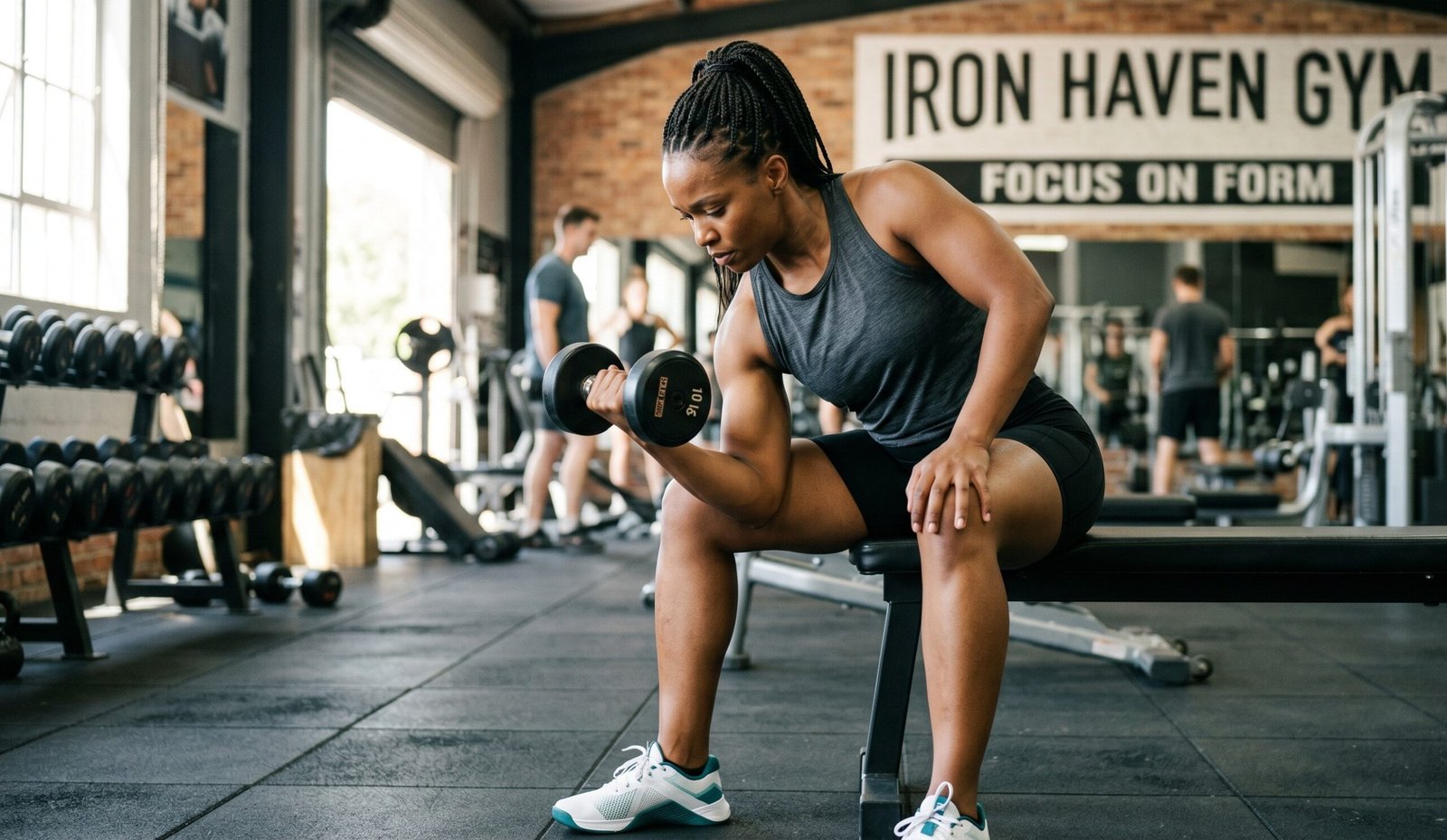
Building strong arms is not just about lifting heavy. If you’re looking for the best gym exercise for biceps, remember that muscle growth needs both tension and stress.
A good strength training guide helps you understand arm development. Focus on controlled movements to better stimulate your muscles. This is more effective than rushing through your sets.
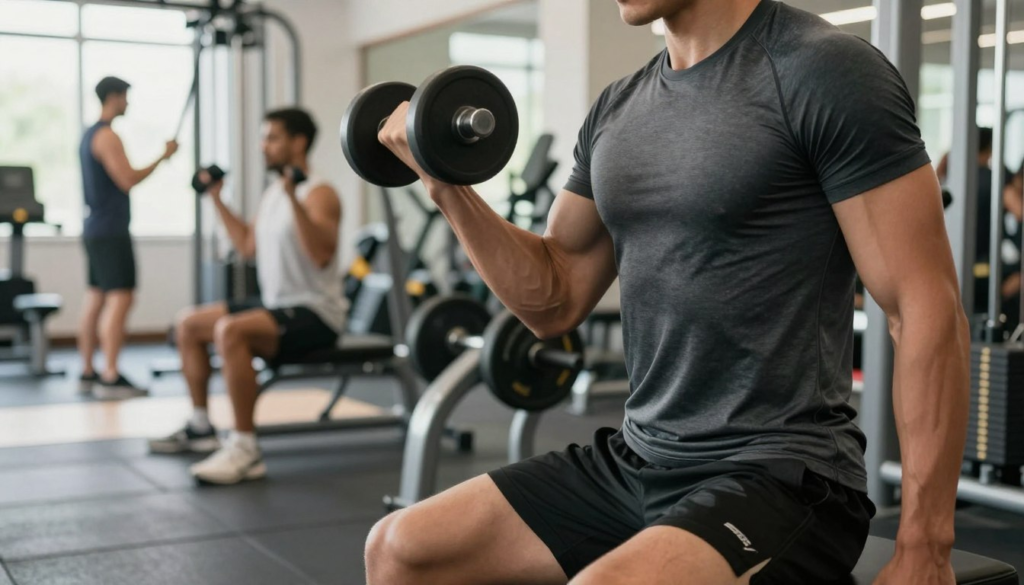
Using different gym arm exercises in your routine is key. It ensures you hit the muscle from all sides. This builds a strong base for progress and helps avoid plateaus. Always focus on perfecting your form to get the most out of each rep.
Key Takeaways
- Muscle growth depends on both mechanical tension and metabolic stress.
- Proper form is more important than the amount of weight lifted.
- Targeting the muscles from different angles promotes balanced development.
- Consistency in your routine is the primary driver of long-term results.
- Understanding the mechanics of movement prevents common training injuries.
Understanding Bicep Anatomy and Growth Mechanics
To build impressive arms, you must first understand the science behind your muscles. Knowing bicep anatomy helps you choose the best exercises for your goals. This knowledge lets you train with more purpose and intensity.
The Role of the Biceps Brachii
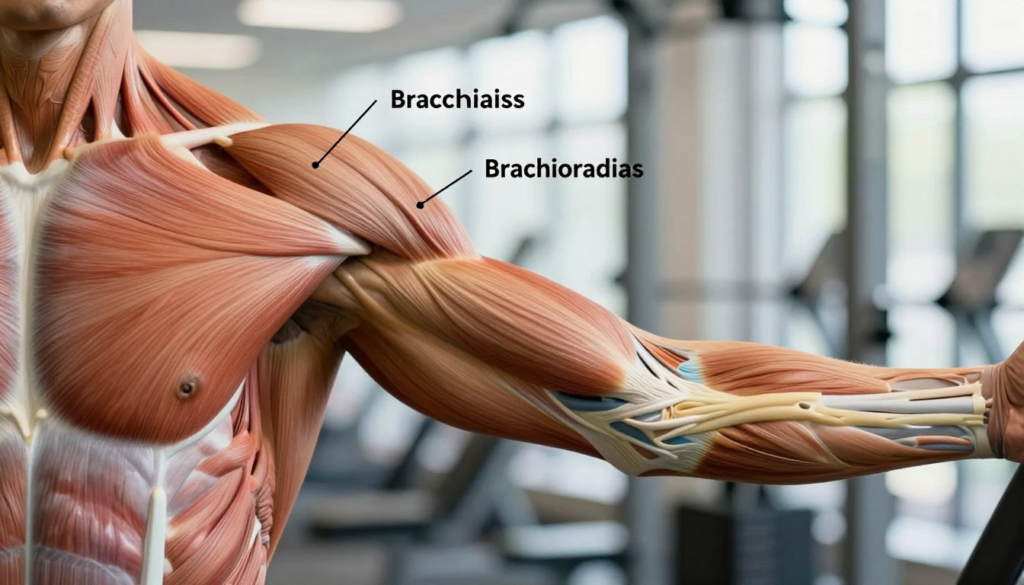
The biceps brachii is a two-headed muscle on the front of your upper arm. Its main bicep brachii function is elbow flexion, or bending your arm. It also helps in forearm supination, or rotating your palm up.
Because the biceps cross both the shoulder and elbow joints, they are active in many pulling motions. Exercises that target these movements help grow your arm muscles. Using the full range of motion ensures you work the muscle fully.
How Muscle Hypertrophy Occurs
Achieving significant size requires muscle hypertrophy. This happens when you train with resistance and cause micro-tears in the muscle. These tears are repaired during rest, making the fibers thicker and stronger.
To grow muscles, you need to keep challenging them with more weight. Consistent training and proper rest are key to changing your body over time.
Which gym exercise is best for biceps: The Barbell Curl
Many lifters wonder which gym exercise is best for biceps. The answer is often the classic barbell curl. It’s seen as the top choice for building strong arms.
Setting Up Your Stance
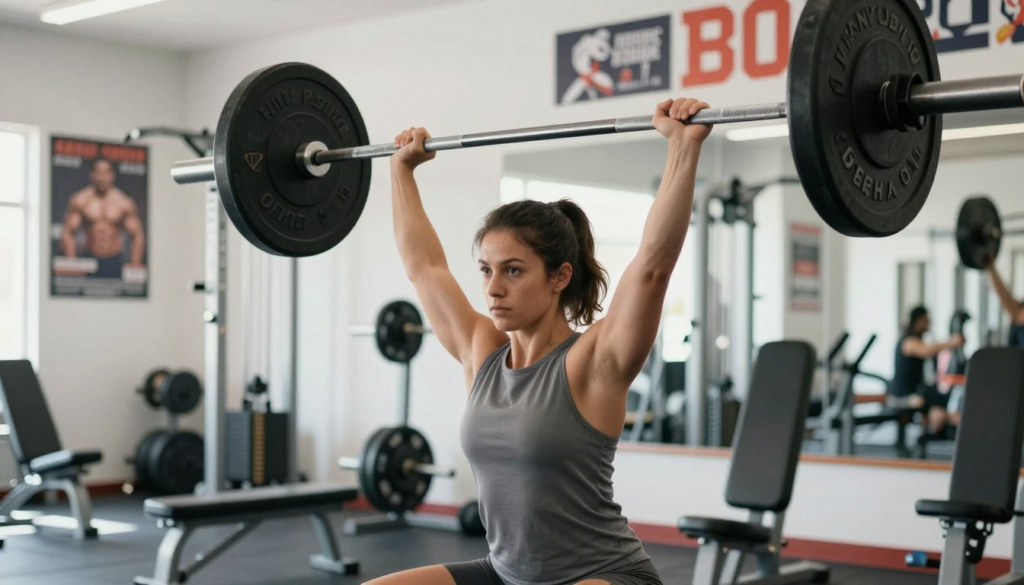
To lift correctly, start with a strong stance. Stand with your feet shoulder-width apart for stability. Keep your knees slightly bent and core tight to protect your back.
Hold the barbell with palms facing forward, hands at shoulder level. Keep your spine straight and chest up. This helps focus on your biceps without losing balance.
Executing the Perfect Repetition
Start the curl by lifting the bar toward your shoulders. Keep your elbows close to your sides. Don’t let your elbows move forward as it takes tension off your biceps.
Lower the weight slowly to work the muscle fully. This barbell curl technique keeps tension on the muscles. Move your arms fully down without locking your elbows.
Common Form Mistakes to Avoid
Even pros make mistakes that slow their progress. To lift right, watch out for these common errors:
- Using momentum: Don’t swing your body to lift the weight.
- Elbow movement: Keep your elbows still; moving them engages your front deltoids, not biceps.
- Incomplete range: Not lowering the bar fully misses the muscle stretch.
Mastering the barbell curl technique shows you the best gym exercise for biceps. Stick to it and control your movements for the best results.
Targeting the Brachialis with Hammer Curls
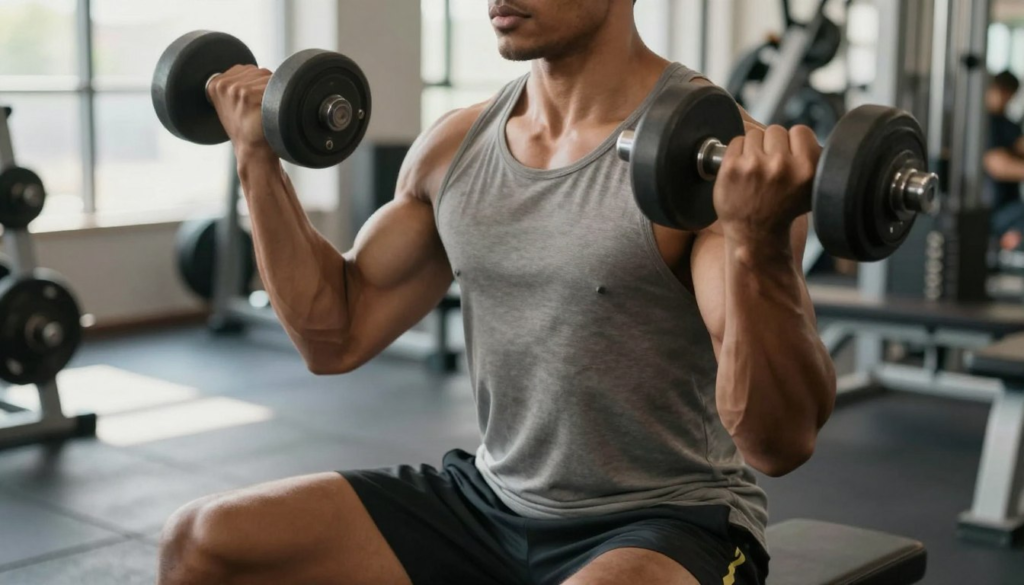
Many lifters focus on the bicep peak, but the brachialis is key for arm size. By changing your grip, you can work this deep muscle for a fuller look. Knowing the hammer curl benefits is crucial for a balanced body.
Why the Hammer Curl Matters for Arm Thickness
The brachialis is under the bicep brachii, connecting your upper and lower arm. Growing this muscle lifts the bicep, making your arms wider. It’s a top arm thickness exercise for many.
Unlike regular curls, the hammer curl’s neutral grip reduces bicep work. This lets the brachialis handle most of the work. Doing this regularly will increase your arm size over time.
Step-by-Step Execution
Stand with your feet apart and hold dumbbells. Keep your palms facing you. This neutral grip helps target the brachialis well.
- Keep your elbows close to your sides.
- Curl the weights up without moving your wrists.
- Hold at the top for a second before lowering slowly.
Safety Tips for Wrist Positioning
Good form is key to avoiding lifting injuries. Keep your wrists straight and firm. Don’t swing your body to avoid putting strain on your wrists.
| Exercise Type | Primary Muscle | Grip Style |
| Standard Curl | Biceps Brachii | Supinated (Palms Up) |
| Hammer Curl | Brachialis | Neutral (Palms In) |
| Reverse Curl | Brachioradialis | Pronated (Palms Down) |
Isolating the Biceps with Preacher Curls
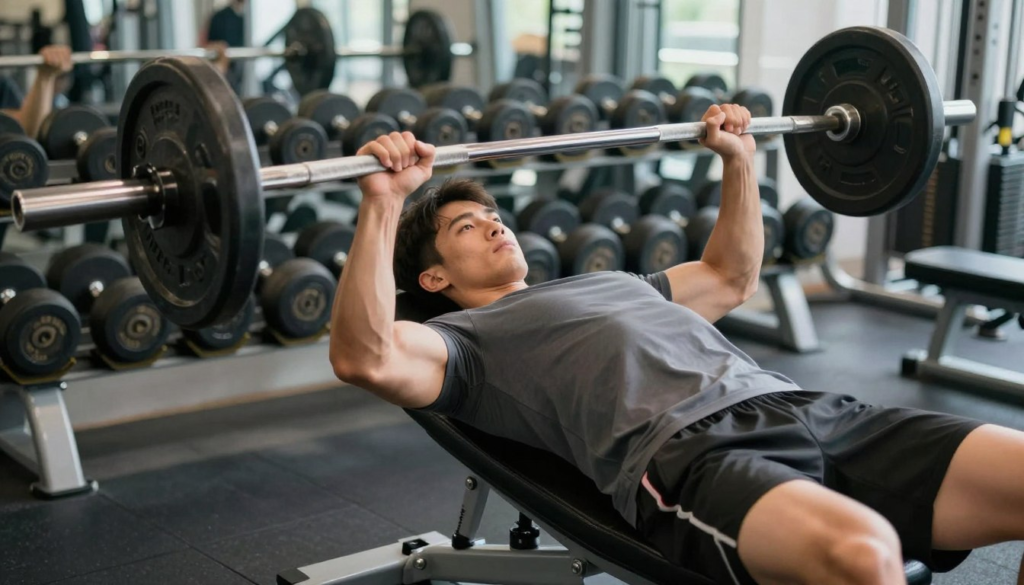
For pure muscle growth, preacher curl isolation is key. This exercise makes your muscles work alone, without help from shoulders or back. Your arms are locked, so every effort goes straight to the biceps.
Setting Up the Preacher Bench
Adjust the equipment to fit your body for best results. Set the seat so your armpits rest on the pad top. Your upper arms should stay flat against the slope.
Make sure the bench is just right. If it’s too high or low, you’ll lose stability for bicep isolation. Keep your feet on the floor for a solid base. This stops your body from moving during the lift.
Maximizing the Stretch and Contraction
The preacher curl’s power comes from its motion. Slowly lower the weight until your arms are almost straight. This stretch is crucial for muscle growth.
When curling the weight up, squeeze the muscle at the top. Keep tension constant by not resting the weight at the bottom. Here are tips for proper lifting form:
- Keep your wrists straight to avoid strain.
- Control the weight on the way down.
- Focus on the mind-muscle connection during the peak contraction.
Avoiding Momentum and Swinging
Many lifters fail because they use momentum. To keep proper lifting form, press your chest against the pad. If you rock back and forth, the weight is too heavy.
Consistency is the key to success. By avoiding momentum, you make your biceps work harder. This strict focus on bicep isolation will boost strength and define your arms over time.
Advanced Techniques for Maximum Hypertropy
To keep growing, you need to try new things. When old workouts stop working, it’s time to try new methods. These new ways challenge your body and help your muscles grow.
Implementing Drop Sets for Intensity
Drop sets are great for pushing your biceps hard. Start with a heavy weight, then drop it by 20% and keep going. This keeps your muscles stressed, which helps them grow.
Drop sets make you work harder and exhaust your muscles. Consistency is key, but it’s the intensity that really changes your body.
Utilizing Slow Eccentric Movements
Eccentric training is another powerful tool. Focus on the slow lowering of the weight, taking three to five seconds. This makes your biceps work harder for longer.
“The quality of your movement is far more important than the quantity of weight on the bar.”
This method causes more muscle damage, which your body then repairs. Adding eccentric training to your routine can help you break through plateaus.
The Importance of Mind-Muscle Connection
A strong mind-muscle connection is crucial. You need to focus on contracting your biceps with every rep. Imagine the muscle fibers working as you move the weight.
Building this connection helps you target your biceps better. When you focus, you make sure your biceps do the work, not your shoulders or momentum. This focus is key to maximum muscle hypertrophy.
Creating Your Personalizd Bicep Training Routine
Creating an effective arm workout plan is more than just lifting heavy weights. It’s about treating your training as a calculated system. A good bicep training routine lets you track your progress and adjust based on how your body reacts.
Determining Your Weekly Volume
Finding the right bicep workout volume is key to avoiding overtraining. Most people do well with 10 to 15 total sets per week for biceps. Beginners should start with fewer sets to let their muscles adapt.
Watch how your body recovers to see if you need more or less work. If you feel strong and ready for the next session, you might increase your volume. But if you’re sore or in pain, it’s time to ease up.
Balancing Compound and Isolation Movements
Using a mix of heavy compound lifts and targeted isolation exercises is best. Compound movements like rows or pull-ups build overall arm strength. They let you lift more weight, which is crucial for growth.
Then, do isolation exercises to focus on the biceps. This combo helps build size and improve the aesthetic shape of your arms. Switching between these types of exercises keeps your muscles challenged in different ways.
Recovery and Progressive Overload
Growth happens when you’re resting, not just when you’re lifting. Sleep and nutrition are as important as your workouts. Without enough rest, your body can’t fix the muscle damage from your bicep workout volume.
To keep growing, apply the principle of progressive overload. This means always increasing the weight, reps, or intensity of your workouts. By tracking your lifts, you ensure you’re pushing yourself harder each week, which is essential for growth.
Conclusion
To get the body you dream of, you need science and hard work. Now, you know how to pick the best exercises for your goals.
Good bicep training means using the right amount of tension. Always focus on your form to make sure your muscles work, not your momentum.
Tracking your progress is key. Keep a record of your weights and reps. This helps you know if you’re pushing yourself enough.
Mix up your gym workouts to avoid getting bored and stuck. Try different exercises to work different muscle parts and encourage growth.
Stick to your workout plan and be patient. Your effort in the gym will show as you build stronger, more defined arms.
FAQ
Which gym exercise is best for biceps if I want to build overall mass?
The Barbell Curl is the top choice for building arm mass. It lets you lift heavier weights than other exercises. This means more mechanical tension for your biceps.
Using a Rogue Fitness Olympic bar ensures stability. It helps you move through a full range of motion. This stimulates the bicep brachii effectively.
How can I increase the thickness and width of my arms?
To widen your arms, focus on the brachialis muscle under the biceps. The Hammer Curl is best for this, as it doesn’t rely on supinators. Using Iron Master dumbbells helps push the bicep upward.
This makes your arms look thicker and more powerful.
Why should I include preacher curls in my strength training guide?
Preacher curls are key for those who cheat during exercises. They keep your shoulders stable on a Hammer Strength preacher bench. This forces your biceps to work harder.
It ensures a strong peak contraction and avoids using your back to lift the weight.
What is the fastest way to trigger muscle hypertrophy in the arms?
Fast muscle growth needs mechanical tension and metabolic stress. Lifting heavy is important, but so is progressive overload. Gradually increase the weight or reps over time.
Focus on a strong mind-muscle connection. This ensures you’re targeting the right fibers during each lift.
How do advanced techniques like drop sets help bicep development?
Advanced techniques like drop sets push your muscles beyond initial failure. They help break through plateaus. Drop sets increase time under tension.
Slow eccentric movements cause micro-tears in muscle fibers. This leads to repair and growth. These methods maximize muscle hypertrophy.
What is the ideal weekly volume for bicep training?
Intermediate lifters should aim for 10 to 20 hard sets a week. Mix compound movements like weighted chin-ups with isolation movements like curls. This variety targets both long and short bicep heads.
It also allows for proper recovery between sessions.
Is forearm supination necessary during bicep curls?
Yes, forearm supination is crucial for bicep curls. It involves turning your palm upward. This intense contraction is vital for developing the bicep’s peak.
It ensures full muscle engagement during the exercise.
