
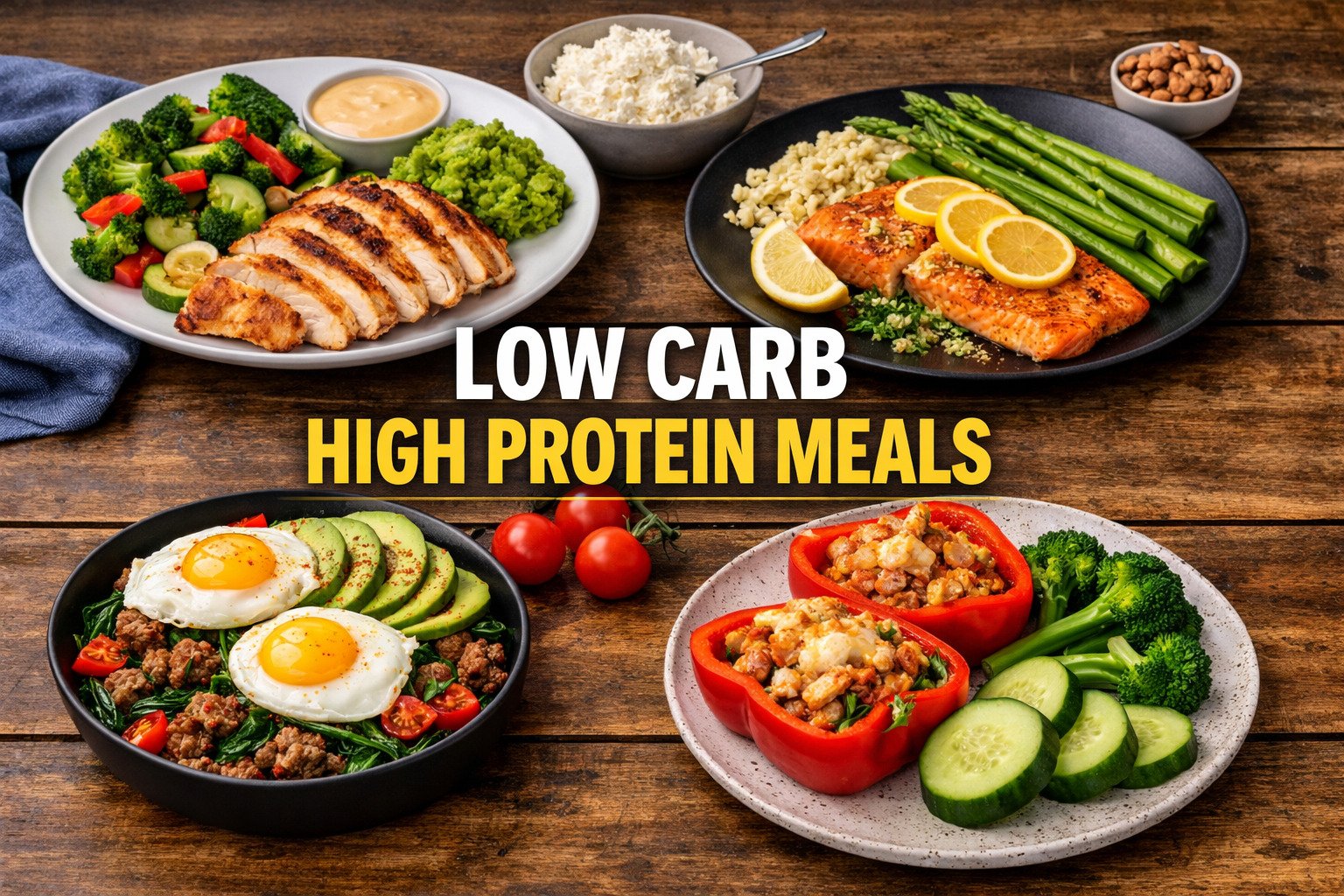
Reaching your fitness goals can seem like a puzzle. Many find it hard to lose fat while gaining lean muscle. Low Carb High Protein Meals help create a body-friendly metabolic environment.
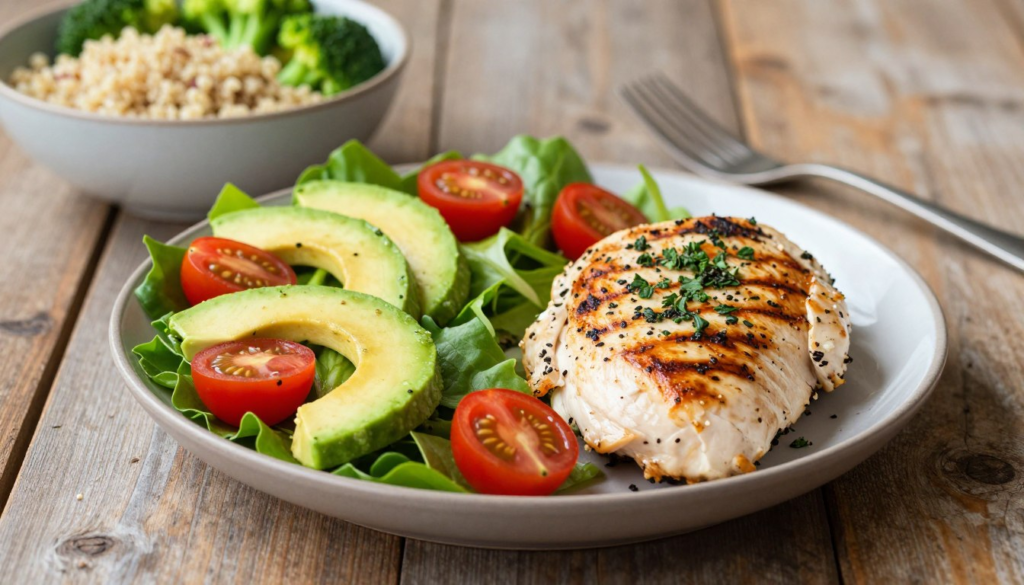
This diet keeps hunger in check and supports your workouts. It’s an evidence-based approach that makes nutrition easier. You’ll notice better energy all day long.
Whether you’re aiming for weight loss or muscle gain, this guide has what you need. Let’s dive into how to make your meals work for you.
Key Takeaways
-
- Prioritizing specific macronutrients helps regulate appetite and metabolic rate.
-
- Combining these food groups supports fat reduction without sacrificing strength.
-
- Consistent nutrition choices are essential for long-term body composition success.
-
- Strategic eating patterns keep your energy stable during busy days.
-
- Evidence-based habits empower you to reach your fitness milestones effectively.
The Science of Low Carb High Protein Meals
Your diet affects how your body grows muscle and loses fat. Knowing how it works helps you eat better for fitness. Low Carb High Protein Meals are key for changing your body.
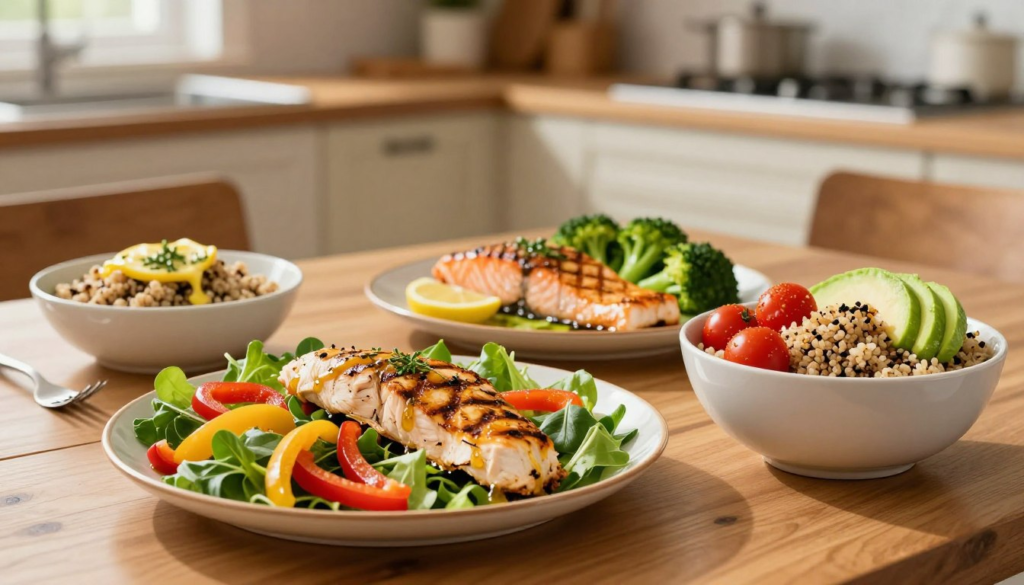
How Protein Supports Muscle Protein Synthesis
When you lift weights, your muscles get tiny tears. To fix these, your body needs amino acids. This is called protein synthesis and it’s crucial for muscle growth.
Good protein gives your body what it needs to heal after working out. Without enough, your muscles might not recover well. Eating enough protein helps keep your muscles strong, even when you’re not eating as much.
The Role of Carbohydrate Restriction in Fat Oxidation
Not eating as many carbs changes how your body uses energy. With less glucose, your body burns fat for energy. This makes fat oxidation better, helping you lose fat.
By cutting down on sugars and starches, your blood sugar stays stable. This stops your body from storing fat. Instead, it uses fat as its main energy source.
Balancing Macronutrients for Optimal Body Composition
Getting the right mix of nutrients is crucial for success. You need enough fats and proteins to keep your energy up. A good plan keeps your metabolism going while you work on your body.
| Macronutrient | Primary Function | Impact on Body |
| Protein | Tissue Repair | Supports muscle gain |
| Carbohydrats | Energy Supply | Regulates fat oxidation |
| Healthy Fats | Hormonal Health | Maintains metabolic rate |
Keeping your nutrient balance right is key for lasting success. With the right macros, your body gets what it needs to do well. This way, your Low Carb High Protein Meals help your body grow muscle and stay healthy.
Essential Ingredients for Your Meal Prep
Starting your meal prep journey is all about picking the right foods. Focus on foods that are full of nutrients to help you reach your fitness goals. High-quality lean protein and fresh veggies are key.
High-Quality Lean Protein Sources
Protein is crucial for fixing muscles and keeping your metabolism healthy. Choosing lean protein means your body gets the amino acids it needs without too many calories.
Selecting Poultry and White Fish
Poultry and white fish are great for your meal prep. They’re easy to cook and full of good protein.
-
- Chicken Breast: A classic choice that works well in almost any dish.
-
- Turkey Breast: A great lean alternative for ground meat recipes.
-
- Cod and Tilapia: These white fish varieties provide a light, protein-rich base for your meals
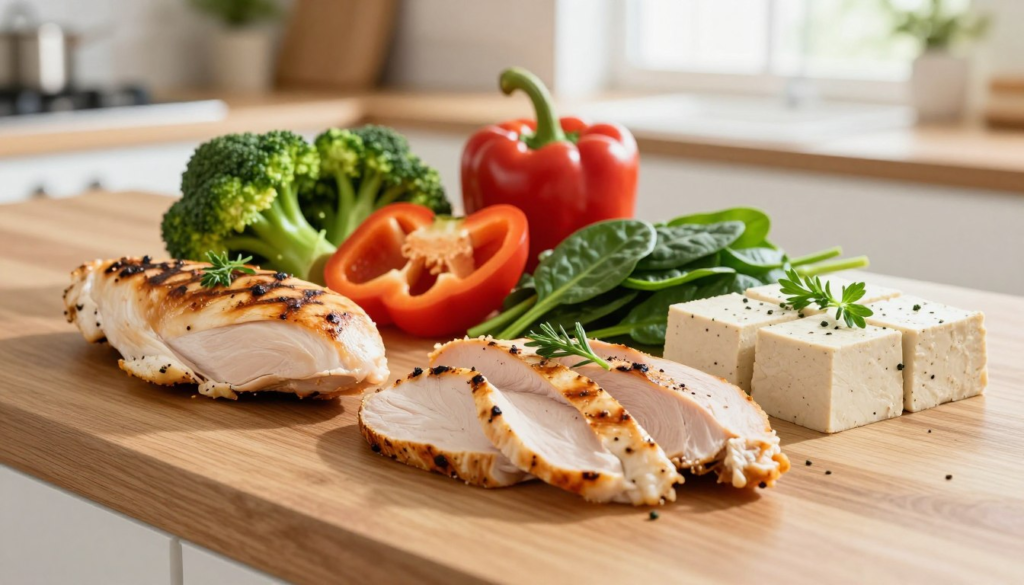
Adding plant-based proteins to your meal prep can make your meals more interesting. These foods offer unique nutrients and fiber that help with digestion.
-
- Tofu and Tempeh: These soy-based proteins absorb flavors beautifully during cooking.
-
- Lentils and Chickpeas: Perfect for adding texture and plant-based protein to salads or stews.
Low-Glycemic Vegetables and Healthy Fats
Choosing the right sides is key for long-term success. Use low-glycemic vegetables to keep your blood sugar stable all day.
Fiber-Rich Greens for Satiety
Fiber helps you feel full and satisfied. These greens add volume to your meals without too many calories.
Choose dark, leafy greens like spinach, kale, and arugula. Also, add broccoli or cauliflower for crunch and vitamins.
Incorporating Healthy Fats for Hormonal Health
Fats are important for your hormones and metabolism. Adding healthy fats in moderation keeps your body working well.
| Source | Benefit | Serving Suggestion |
| Avocado | Monounsaturated fats | 1/4 fruit per meal |
| Olive Oil | Heart health | 1 tablespoon |
| Walnuts | Omega-3 fatty acids | Small handful |
By mixing these healthy fats with your protein and veggies, you get a balanced diet. This mix keeps your energy up and helps with weight loss.
Step-by-Step Guide to Building Your Daily Menu
Creating a good nutrition plan starts with knowing your body’s needs. It’s important to make sure every meal helps you reach your fitness goals.
Calculate Your Daily Caloric and Macronutrient Needs
First, figure out how many calories you need. Use an online calculator to find your Total Daily Energy Expenditure (TDEE). This depends on your age, weight, and how active you are.
To lose weight, cut 300 to 500 calories from your daily needs. Then, divide your macros to focus on protein. Protein helps keep your muscles while you lose fat.
Plan Your Breakfast for Sustained Energy
Your breakfast is key for the day. Mix high-quality proteins with healthy fats. This keeps your blood sugar steady and hunger low.
Stay away from sugary cereals or pastries. They cause energy crashes later. Instead, choose eggs, Greek yogurt, or protein smoothies for a boost in the morning.

Prepare Lunch and Dinner for Muscle Recovery
Lunch and dinner should help your muscles recover after workouts. Choose lean proteins like chicken, fish, or tofu. Pair them with fiber-rich, low-carb veggies.
Batch Cooking Techniques for Efficiency
Good meal prep helps when life gets hectic. Spend a few hours on Sunday to batch cook proteins and grains in bulk.
Batch cooking saves you from ordering takeout. Store your meals in airtight containers to keep them fresh all week.
Seasoning and Flavor Profiles Without Added Sugars
Many sauces have hidden sugars that can hurt your diet. Use fresh herbs, spices, citrus, and vinegars instead.
Try bold flavors like smoked paprika, garlic, or ginger. This makes your food tasty without extra calories.
Manage Snacks to Prevent Overeating
Smart snacking keeps you full between meals without going over your calorie limit. Choose simple snacks like almonds, hard-boiled eggs, or cottage cheese.
Plan your snacks ahead to avoid bad choices. The table below shows how to balance your daily intake.
| Meal Type | Primary Goal | Key Nutrient Focus |
| Breakfast | Sustained Energy | Protein & Healthy Fats |
| Lunch | Muscle Recovery | Lean Protein & Fiber |
| Dinner | Repair & Satiety | Protein & Low-Carb Veggies |
| Snacks | Hunger Control | Protein & Micronutrients |
Strategies for Sustaining Your Progress
Keeping up your results takes more than just starting strong. You need a solid plan for ongoing success. Focus on building habits that last, ensuring your weight loss journey stays on track.
Tracking Your Intake for Accountability
Keeping a close eye on what you eat is key to success. Recording your meals helps you understand your habits and where extra calories come from.
Using apps or a food journal keeps you true to your goals. It stops you from eating too much and helps you meet your nutrition targets.

Adjusting Your Plan Based on Performance
Your body will adapt to your routine, leading to fitness plateaus. When you hit a wall, it’s time to change your approach, not give up.
First, check your activity levels and how much energy you burn. If you’re stuck, try increasing your protein or training harder to boost your metabolism.
Overcoming Common Challenges and Plateaus
Life throws unexpected challenges, testing your commitment. Staying proactive helps you overcome these obstacles without losing your way.
Handling Social Situations and Dining Out
You can enjoy meals out without ruining your diet. Opt for lean proteins like grilled chicken or fish and veggies instead of carbs.
Focus on the company, not the food. Plan your meals for the day, so you can stick to your caloric deficit without feeling left out.
Managing Cravings During Caloric Deficits
Cravings are normal when you’re in a caloric deficit. But they shouldn’t control you. For hunger, choose snacks like raw veggies or Greek yogurt.
Drinking plenty of water is also key to fighting false hunger. Remember, your health goals are more important than any craving.
Conclusion
Changing your body composition needs a strong commitment to good nutrition. You now have the knowledge to balance your macronutrients and fuel your muscles right.
Using these proven strategies will help you reach your fitness goals in a lasting way. Improve your meal prep by choosing top-quality proteins and veggies with low glycemic indexes. This helps burn fat and keeps your muscles strong.
Keeping track of what you eat helps you stay on track. Adjust your calorie intake based on how you perform and recover. Making small, steady changes can greatly improve your health over time.
Your path to a stronger body depends on sticking to these daily habits. Keep your eyes on the long-term goals for lasting success. With smart food choices and planning, you can shape your future.
Begin your transformation by adding one new habit from this guide. Share your progress with friends to stay motivated. Your dedication to this lifestyle will bring lasting results.
FAQ
How does a low carb high protein diet create a metabolic environment for fat loss?
By cutting down on carbs, your body starts using fat for energy. This makes you burn stored fat more efficiently. The high protein helps keep your muscles strong and your metabolism steady while you lose weight.
Can I actually build muscle while consuming fewer calories?
Yes, you can. Focus on muscle protein synthesis. Eating enough lean protein, like chicken or fish, gives your body the amino acids it needs to repair and grow muscles after working out, even when you’re eating fewer calories.
What are the best protein options for someone following a plant-based lifestyle?
For plant-based diets, try tempeh, seitan, or high-protein legumes from Whole Foods Market. These options help you meet your protein needs and offer a variety of foods beyond animal products.
Why is it important to include low-glycemic vegetables in my meal prep?
Low-glycemic veggies like spinach, kale, and asparagus are full of fiber. They help you feel full longer, which is key for managing hunger and avoiding overeating.
Do I need to eliminate all fats to see results?
No, you don’t have to cut out all fats. Healthy fats, like those in olive oil or avocados, are important for your hormones and metabolism. A balanced diet keeps your body healthy and your energy levels up as you change your body shape.
How can I ensure I am accurately hitting my nutritional targets?
Calculate your daily calorie and macronutrient needs based on your activity level and weight goals. Use apps like MyFitnessPal to track your intake. This helps you make adjustments as your body changes.
What is the most efficient way to prepare meals for a busy work week?
Batch cooking is the best way to stay on track. Cook large amounts of lean proteins and veggies ahead of time. This makes it easy to make healthy meals that help with muscle recovery without relying on processed foods.
How should I handle social situations and dining out at restaurants?
When eating out, choose protein-rich dishes and ask for extra greens instead of carbs. This way, you can enjoy meals out while keeping your diet balanced and on track with your goals.
What should I do if I encounter a fitness plateau?
If you’re not seeing progress, check your tracking data for any hidden calories. Consider increasing your protein or changing your workout intensity to boost fat loss and get moving again.
